In fiscal year 2025, the IRS closed 497,621 tax return audits and recommended $26.8 billion in additional tax. Despite $54 billion in rescinded Inflation Reduction Act funding through fiscal year 2026, automated matching remains active.
For a W-2 household reporting creative side-business losses on Schedule C, the main audit danger is rarely a startup loss alone. Instead, an automated 1099 mismatch often invites a Section 183 hobby review that wipes out every deduction.
How Automated Mismatches Open a Section 183 Examination
The IRS scores returns using statistical computer screening built from National Research Program norms and linked taxpayer records. Disproportionate Schedule C losses against W-2 wages raise review scores, while third-party form discrepancies trigger immediate automated flags.
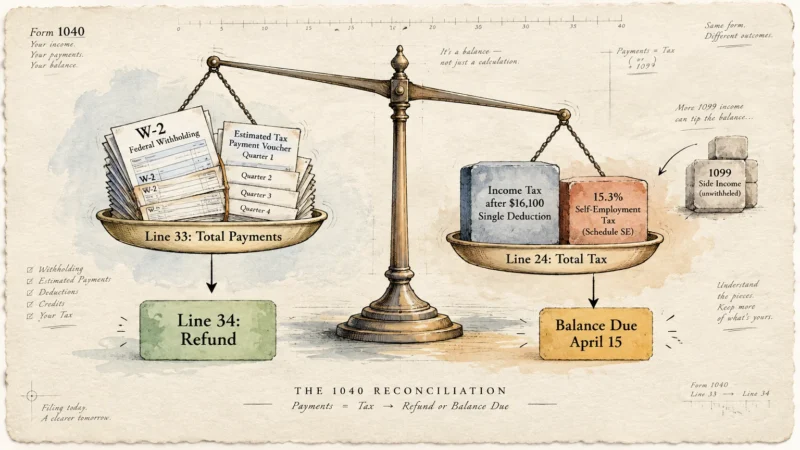
Under the Automated Underreporter program, omitting a W-2, 1099-NEC, 1099-K, or 1099-DA generates a proposed adjustment on Notice CP2000. Once that correspondence opens, examiners frequently review related Schedule C deductions for genuine profit motive.
Large Schedule C losses can also drop household AGI into Earned Income Tax Credit eligibility and freeze refunds. In those cases, the IRS mails Notice CP06, CP75, or CP75A requesting Form 886-H-EIC proof of child residency and earned income.
Five-Point Audit Defense Log for Creative Side-Business Filers
A W-2 household running a creative venture—such as craft sales, illustration, or freelance design—can contain both automated notices and Schedule C examinations with contemporaneous records. The table below pairs five common triggers with verifiable 2026 IRS forms, rules, and deadlines.
| Defense Step | IRS Form or Rule | Required Audit Record | Action Deadline |
|---|---|---|---|
| 1. Reconcile payer statements | Forms 1099-NEC, 1099-K, 1099-DA, and Form 1040 | Gross receipts ledger matching payment-app totals and crypto cost basis | Before April 15 (or October 15 with Form 4868) |
| 2. Separate business cash flow | Treasury Reg. Section 1.183-2(b) businesslike-manner factor | Dedicated business checking account, vendor invoices, and mileage log | Ongoing throughout 2026 |
| 3. Document profit motive | IRC Section 183 nine-factor test and 3-of-5-year presumption | Written business plan, pricing adjustments, and weekly hours log | Updated quarterly; keep 3 to 6 years |
| 4. Substantiate studio space | Form 8829 or Schedule C simplified method; IRC Section 67(g) | Exclusive-use studio measurements, utility bills, and workspace photos | Prior to filing 2026 Form 1040 |
| 5. Verify charitable gifts | Form 8283, Schedule A, and 0.5%-of-AGI floor | Charity letters ($250+), Section A (over $500), appraisal and Section B (over $5,000) | Before filing 2026 Form 1040 |
Reconciling Forms 1099-K, 1099-NEC, and 1099-DA Before April 15

Employers, clients, and payment processors transmit Forms W-2, 1099-NEC, and 1099-K directly to IRS matching computers. Omitting a $1,200 freelance 1099-NEC or reporting lower gross receipts on Schedule C Line 1 than payer totals triggers Notice CP2000.
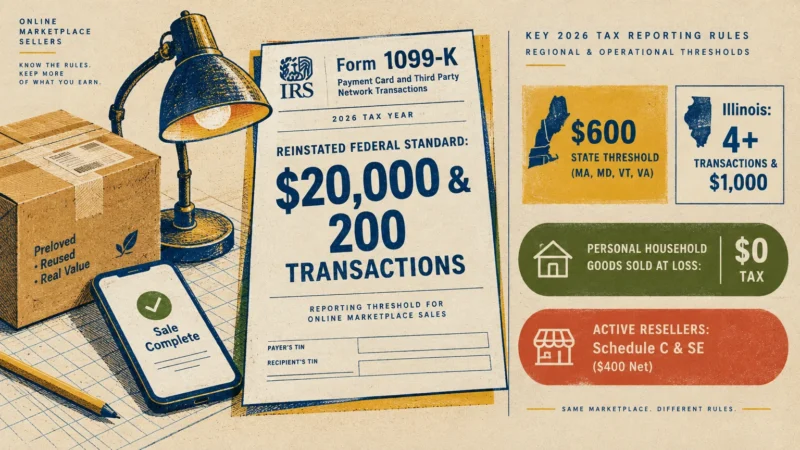
For 2026 payment-app transactions, federal law restored the Form 1099-K reporting threshold to over $20,000 and more than 200 transactions. Even without receiving a form, net profits from online marketplace sales remain taxable on Schedule C.

Creative sellers paid in cryptocurrency or trading digital assets also face third-party matching in 2026. U.S. custodial brokers report dispositions on Form 1099-DA, covering gross proceeds and, starting in 2026, covered-asset cost basis.
Filers must still track cost basis independently for self-custodied transfers, older holdings, and decentralized finance trades. Answering no to the Form 1040 digital asset question when a Form 1099-DA sits on file creates an immediate mismatch.
When a client or marketplace reports the wrong dollar amount, filers should never alter the figure silently on Schedule C. Instead, contact the issuer immediately to request a replacement statement with the CORRECTED box checked.
If a corrected 1099 will not arrive by April 15, filing a federal tax extension on Form 4868 moves the filing deadline to October 15. Any estimated tax owed must still be paid by April 15.
Defending Schedule C Losses and Studio Deductions Under Treasury Regulation 1.183-2
Repeated Schedule C losses draw IRS Small Business and Self-Employed scrutiny when they shelter W-2 wages. Under Internal Revenue Code Section 183, activities lacking a genuine profit motive become hobbies whose deductions cannot offset outside income.
The IRS presumes a profit motive if an activity earns a profit in at least three of five consecutive tax years. Otherwise, examiners apply the nine-factor profit-motive test in Treasury Regulation Section 1.183-2(b), weighing records, expertise, time spent, and financial dependence.
Commingling personal purchases and studio costs weakens a return across several regulatory factors. Maintaining a dedicated business checking account and contemporaneous invoices separates self-employed contractor income from household spending.
Remote W-2 workers must also keep employee workspace separate from side-business studio claims. Under Internal Revenue Code Section 67(g), enacted in the Tax Cuts and Jobs Act and made permanent by Public Law 119-21, unreimbursed employee expenses remain disallowed, leaving W-2 workers with zero federal home-office deduction.
Only the Schedule C creative business may claim a Schedule C home office deduction via Form 8829 or the simplified method. The studio area must be used regularly and exclusively for business, never as a shared guest room.
Worked Walkthrough: 2026 Hobby-Loss Reclassification on a W-2 Return
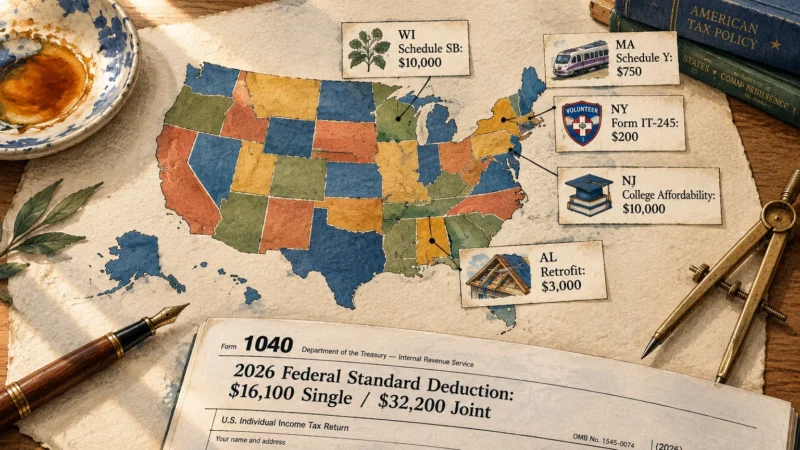
Consider a married couple filing jointly in 2026 with $132,000 in W-2 wages, $6,000 in craft sales, and $18,000 in non-inventory Schedule C expenses. The $12,000 net loss cuts AGI to $120,000 and taxable income to $87,800 after the $32,200 standard deduction.
At 2026 joint rates of 10% up to $24,800 and 12% up to $100,800, their federal income tax totals $10,040. If an IRS examiner reclassifies the craft venture as a hobby under Section 183, all $18,000 in operating expenses disappear.
Because IRC Section 67(g) bars miscellaneous itemized deductions, non-inventory hobby expenses cannot offset the $6,000 gross receipts on Schedule A. Only verified Cost of Goods Sold reduces gross receipts, leaving the full $6,000 taxable on Schedule 1.
Adding $6,000 to $132,000 in wages raises AGI to $138,000 and taxable income to $105,800, pushing $5,000 into the 22% joint bracket. Their federal tax rises to $12,700, adding $2,660 in tax plus interest or a 20% Section 6662 penalty ($532).
Noncash Donations and the 2026 Charitable Floor
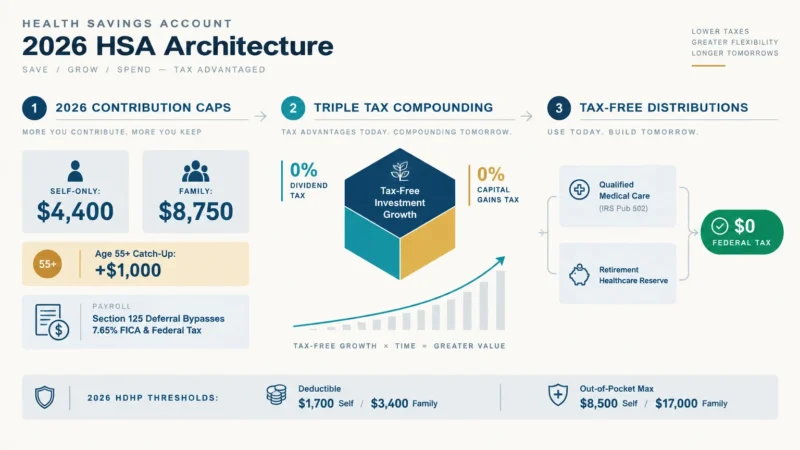
Creative side-business owners donating studio supplies or household goods face strict substantiation checks on Schedule A. For 2026 returns, itemized charitable gifts face a 0.5%-of-AGI floor, while non-itemizers may deduct up to $1,000 single or $2,000 joint in cash gifts.
Whenever total noncash donations exceed $500, filers must attach Form 8283 Section A to Form 1040. Single items or similar property groups exceeding $5,000 require Section B, a qualified appraisal, and a donee signature.
Households using charitable bunching strategies to clear the $32,200 joint standard deduction must also hold written charity acknowledgments for gifts of $250 or more. Keeping receipts before filing prevents routine correspondence disallowances.
Responding to a CP2000 Notice or IRS Examination Letter

Opening IRS mail promptly protects the standard 30-day response window printed on Notice CP2000 and audit letters. Ignoring a proposed adjustment allows the agency to issue a 90-day Statutory Notice of Deficiency with compounding interest.
For Automated Underreporter mismatches, follow the official CP2000 response steps to mark agreement or disagreement and submit records through the IRS Document Upload Tool. Send copies rather than original receipts, and limit the reply strictly to the questioned items.
Under IRS Publication 556, taxpayers may protest disputed adjustments to the IRS Independent Office of Appeals. An Enrolled Agent, CPA, or tax attorney authorized on Form 2848 can handle disputes, while qualifying households may use a Low Income Taxpayer Clinic.
Extensions, Form 1040-X Amendments, and the Audit Clock
Does requesting a Form 4868 extension increase Schedule C audit odds?
No, filing Form 4868 by April 15 for an automatic extension to October 15 does not raise audit selection odds. Waiting to submit Form 1040 until corrected 1099 statements arrive prevents the document mismatches that trigger Notice CP2000.
Should a filer submit Form 1040-X or wait after spotting an error?
Filing an amended return on Form 1040-X before the IRS sends a notice stops failure-to-pay interest from growing on unpaid tax. Proactive correction also reduces exposure to the 20% accuracy-related penalty compared with waiting for Automated Underreporter action.
How many years back can the IRS audit a side-business return?
The IRS generally has three years from the filing date to assess additional tax under IRC Section 6501. That window extends to six years if gross income is understated by over 25%, with no limit for unfiled returns or civil fraud.