Closing a credit card carrying a $550 annual fee looks straightforward until a borrower sits within six months of applying for a mortgage. Shutting down that credit line immediately shrinks available credit, which can raise utilization and dent scores right before underwriting.
Contrary to generic advice, canceling first or opening a replacement card creates avoidable mortgage risk. A pre-mortgage borrower should first seek a no-fee downgrade or same-bank limit shift, reserving closure for a strict five-step order once balances reach $0.
How Closing a $550-Fee Card Hits Pre-Mortgage Underwriting
Mortgage lenders delivering loans to Fannie Mae or Freddie Mac use Classic FICO or VantageScore 4.0, which FHFA began accepting on April 22, 2026. FICO 10T is not yet accepted for deliveries, and both active models react quickly to utilization jumps.
Two of the five factors in a FICO credit score respond when a card closes: credit utilization (roughly 30%) and length of credit history (roughly 15%). Payment history carries the largest weight, so preventing trailing-bill delinquencies during closure protects loan pricing.
Consider a prospective homebuyer holding a $7,500 no-fee card and a $12,500 card facing a $550 annual fee ($20,000 combined limit) with $3,600 in balances. That starting 18% utilization stays well below the 30% threshold that CFPB guidance flags as elevated risk.
Closing the $12,500 card without paying off debt or moving the limit drops total credit to $7,500 and spikes reported utilization to 48%. Top mortgage-ready scores typically keep utilization under 10%, so that jump can cost points right when rate locks occur.
Account age drops slowly by comparison because positive payment history on closed accounts stays on credit reports for up to 10 years. Once mortgage preapproval starts, borrowers should check with their loan officer before closing or opening any tradeline.
Downgrade or Reallocate Before Closing During Mortgage Prep
When a $550 annual fee is the only problem, closing the account is rarely the best first option. Calling the issuer for a product change to a $0-annual-fee card keeps the existing account number, credit limit, and account age completely intact.
Product changes still follow bank boundaries. Downgrades must stay within the same card family or co-brand partner, meaning an airline or hotel card typically cannot convert to a bank cash-back card, and no issuer can convert another lender’s account.
If the card downgrades to $0—or already carries no annual fee—keeping it open preserves available credit for mortgage underwriting. Putting one small recurring charge on the card every few months with autopay enabled prevents an involuntary inactivity closure.
If revolving balances feel unmanageable before home shopping, consult a nonprofit credit counselor affiliated with the National Foundation for Credit Counseling (NFCC) before closing accounts. An NFCC counselor can help structure debt payoff without triggering sudden credit-limit cuts.
| Strategy | Utilization Impact ($3,600 Balance) | Hard Pull & Account Age | $550 Fee Outcome | Decision Owner & Path |
|---|---|---|---|---|
| Downgrade (product change) | Stays 18% ($3,600 / $20,000 limit kept) | No hard pull; account age continues uninterrupted | Eliminated if switched to a $0-fee card in same family | Issuer retention desk via phone number on card back |
| Reallocate limit, then close | Stays 18% if full $12,500 moves to surviving card | Usually no hard pull; closed history stays up to 10 years | Avoided or reversed within 30 days or 1 cycle (lesser) of notice | Same-bank personal card support before closure |
| Close without moving limit | Jumps to 48% ($3,600 / $7,500) unless balance hits $0 | No hard pull; closed record drops after 10 years | Avoided or reversed within Regulation Z renewal window | Issuer phone rep plus written closure confirmation |
The Five-Step Order When Closure Is Necessary
When no downgrade path exists—such as a co-branded travel card without a $0-fee tier—closing safely within six months of a mortgage requires a strict sequence. Follow these five steps in order before cutting up the card.
1. Zero Balances, Redeem Rewards, and Move Autopay
Pay the closing card—and ideally all other revolving cards—to $0 before requesting closure so reported utilization reads 0% instead of 48%. Closing an account with an unpaid balance stops new charges while interest keeps compounding.
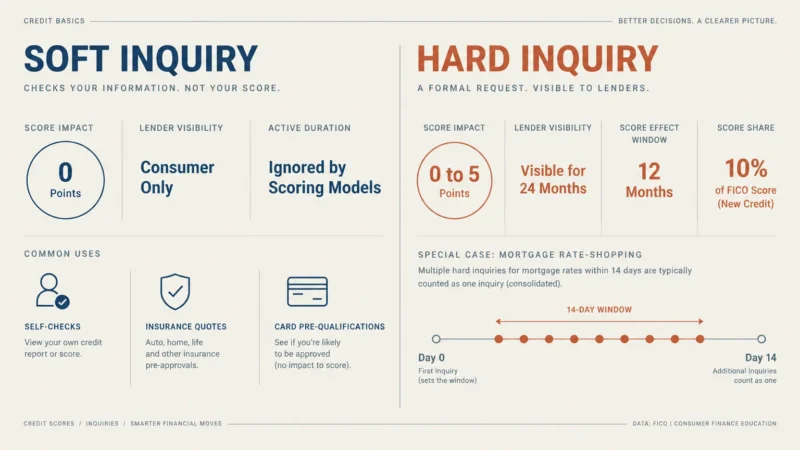
While moving the balance to a 0% APR balance transfer card helps long-term debt payoff, opening a new card within six months of a mortgage adds a hard inquiry. Borrowers preparing for underwriting should pay balances down directly rather than opening new lines.
Redeem or transfer every point, mile, and statement credit before calling the issuer. As CFPB rewards guidance warns, cardholder terms frequently forfeit unredeemed points or miles the instant an account closes.
Audit the past three monthly statements for recurring bills such as insurance, phone service, or streaming subscriptions, and switch them elsewhere. Under federal banking guidance, issuers may still honor preauthorized recurring charges on a closed card, risking a missed payment.
2. Reallocate the Credit Limit Within the Same Bank
If you hold a second personal card with the same bank, call before closing and ask to shift the $12,500 limit onto the surviving card. Keeping the $20,000 aggregate limit intact prevents any utilization spike if balances remain elsewhere.
Issuer rules block cross-bank transfers and usually prohibit shifting limits between personal and business cards. When transfers are barred, requesting a credit limit increase on a remaining card can offset the loss, though borrowers should skip any request requiring a hard credit pull.
3. Request Closure by Phone Within the Fee Window
Check the cardholder agreement for issuer-specific cancellation rules, then call the number on the back of the card. State clearly that the account is closing at the cardholder’s request, and log the date, time, and representative’s name.
Time the call around the annual fee notice. Under Regulation Z renewal rules (12 CFR § 1026.9(e)), issuers must send an advance renewal notice at least 30 days or one billing cycle—whichever is less—before mailing the statement billing the fee.
Cardholders receive that same window from the renewal notice to cancel and avoid, or promptly reverse, the $550 charge. Expect a retention offer on the call, and verify whether the agreement also requires a brief written notice.
4. Get Written Confirmation and Clear Trailing Interest
Ask the representative for an emailed or mailed letter confirming the account is closed with a $0 balance. Keep that confirmation with mortgage and banking records in case a lender or billing dispute requires proof of closure.
Check the next two statements even after seeing a $0 payoff. When a balance was carried recently, residual interest accrues from the start of the billing cycle until your payoff posts, generating one small final bill.
Leaving even a $5 trailing-interest bill unpaid can trigger a 30-day late mark right before loan closing. Fixing a late payment reported in error takes months of documentation, so pay any legitimate residual interest immediately.
Regulation Z (12 CFR § 1026.52(b)(2)) bars card issuers from charging termination fees or imposing new or increased periodic fees on a closed account. However, pre-existing periodic fees may continue while an unpaid balance remains.
When a fee reversal leaves over $1, 12 CFR § 1026.11(a)(2) requires refunding that credit balance within seven business days of a written request. For incorrect charges, send a written billing-error dispute within 60 days of the statement date.
Mail that dispute to the billing-inquiries address listed on the monthly statement. Sending the written notice preserves federal rights to pause collection on the disputed amount while the issuer investigates.
5. Verify All Three Credit Reports After 30 to 45 Days
Wait one full billing cycle, then pull free weekly Equifax, Experian, and TransUnion reports at AnnualCreditReport.com before the mortgage lender orders a credit pull. Confirm the account shows a $0 balance and reads “Closed by consumer” rather than “Closed by grantor.”
If an issuer refuses to correct reporting, withholds a credit-balance refund past seven business days, or assesses barred fees after a written dispute, escalate to federal regulators. File an official complaint through the Consumer Financial Protection Bureau (CFPB) complaint portal.
Common Pre-Mortgage Card Closure Questions
Can a closed card be reopened if a mortgage lender flags utilization?
A few card issuers reinstate a voluntarily closed account within a short window without a hard inquiry. Most banks treat closure as final, however, requiring a brand-new application and hard credit pull that can complicate mortgage underwriting.
How fast does a score recover if utilization jumped after closing?
When a dip comes strictly from higher utilization, paying remaining revolving balances below 30%—and ideally under 10%—usually restores lost points within one or two billing cycles. Recovering points lost when an old closed card drops off at year 10 takes longer.