In Federal Reserve survey data published in August 2026, 26% of Buy Now, Pay Later (BNPL) users paid late and more than 1 in 10 incurred an overdraft fee. For a household earning $2,200 biweekly, December Pay-in-4 installments collide with January rent.
Because the CFPB withdrew its May 2024 BNPL rule in May 2025, Pay-in-4 borrowers lack automatic credit-card dispute freezes on returns. Instead, a Regulation E stop-payment order filed three business days before transfer is the strongest shield against an overdraft.
1. Stacking Multiple Pay-in-4 Loans Into January Paychecks
A single $110 Pay-in-4 checkout asks for just $27.50 upfront, making a $700 holiday gift budget look nearly untouched. Across six major BNPL providers studied by the CFPB, 63% of borrowers held multiple simultaneous loans, creating overlapping biweekly withdrawals.
Consider a renting household earning $2,200 net biweekly on an illustrative 2026–2027 holiday calendar. The shopper places four orders: $110 on Dec 1, $260 on Dec 8, $140 on Dec 15, and $190 on Dec 22, totaling $700.
Although initial checkouts take only $175.00, five December drafts pull $330.00 before New Year’s Eve, leaving $370.00 for January and February. After December rent and holiday essentials, the household enters Dec 31 with $120.00 in checking before its Jan 1 payday.
The ledger below tracks how those stacked 25% installments collide with $1,550.00 January rent, $240.00 winter utilities, and $400.00 in biweekly groceries and transit.
| Date | Checking Activity | BNPL Due | Net Change | Account Balance |
|---|---|---|---|---|
| Dec 31 | Ending balance after $330.00 Dec BNPL drafts | $0.00 | $0.00 | $120.00 |
| Jan 1 | Biweekly paycheck (+$2,200.00) less rent (-$1,550.00) | $0.00 | +$650.00 | $770.00 |
| Jan 3 | Two-week groceries, transit, and phone | $0.00 | -$400.00 | $370.00 |
| Jan 5 | Dec 8 ($65.00) + Dec 22 ($47.50) installments | $112.50 | -$112.50 | $257.50 |
| Jan 10 | Winter electric and gas utility bill | $0.00 | -$240.00 | $17.50 |
| Jan 12 | Dec 1 ($27.50) + Dec 15 ($35.00) installments | $62.50 | -$62.50 | -$45.00 |
| Jan 15 | Biweekly paycheck (+$2,200.00) less essentials (-$400.00) | $0.00 | +$1,800.00 | $1,755.00 |
| Jan 19 | Dec 8 ($65.00) + Dec 22 ($47.50) installments | $112.50 | -$112.50 | $1,642.50 |
| Jan 26 | Dec 15 final installment | $35.00 | -$35.00 | $1,607.50 |
| Feb 2 | Dec 22 final installment | $47.50 | -$47.50 | $1,560.00 |
Notice that $322.50 hits during January alone, turning a slim $17.50 post-utility cushion into a -$45.00 checking deficit on Jan 12. Any bank overdraft fee deepens that shortfall three days before the Jan 15 paycheck arrives.
Logging every Pay-in-4 order as spent in full on the purchase date stops budget drift. On a $700 gift cap, the $190 Dec 22 order consumes the entire remaining allowance rather than looking like a $47.50 charge.
2. Expecting Credit-Card Dispute Rights on BNPL Returns
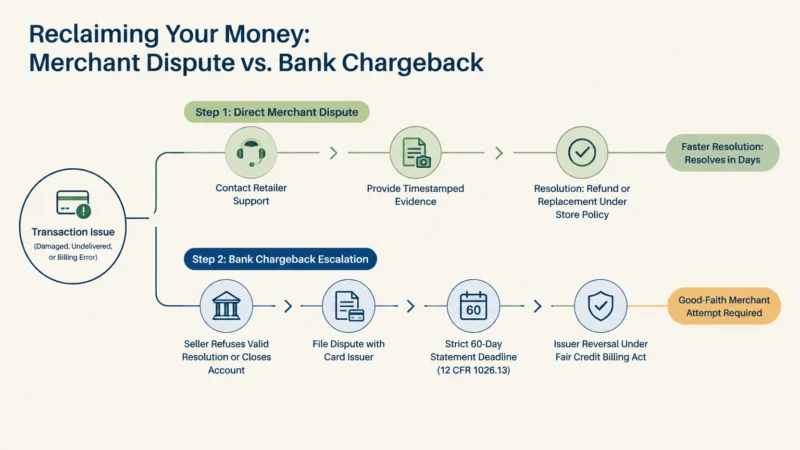
Credit cards carry statutory Truth in Lending Act billing-error rights under Regulation Z (12 CFR § 1026.13). Card issuers must investigate written disputes and pause collection on returned or undelivered merchandise while a claim stays open.
Pay-in-4 accounts lack those automatic federal protections. Although a May 2024 CFPB interpretive rule sought to classify BNPL accounts as credit cards under Regulation Z, the agency halted enforcement and formally withdrew the rule on May 12, 2025.
If the household returns the $260 Dec 8 gift after Christmas, scheduled $65.00 debits on Jan 5 and Jan 19 keep running until the merchant notifies the lender. Warehouse return queues frequently outlast January installment dates.
When a merchant stalls on a tracked return, Regulation E lets the borrower revoke autopay and place a bank stop-payment order at least three business days before transfer. That unilateral freeze keeps the Jan 19 debit from draining rent or grocery money.
Borrowers notify the bank three business days before the debit, follow oral requests in writing within 14 days if required, and revoke lender autopay. Blocking the transfer avoids an overdraft fee, though it does not erase a valid debt.
3. Assuming BNPL Stays Hidden From Credit Reports and Collections
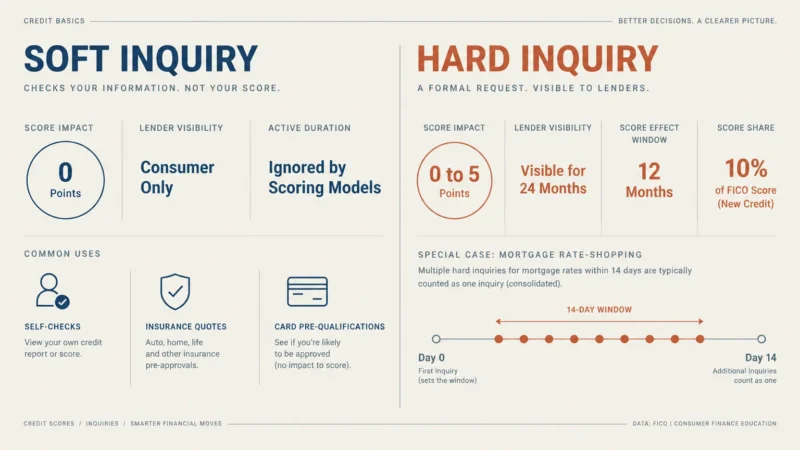
Many holiday shoppers treat Pay-in-4 as invisible, yet bureau reporting works asymmetrically. According to the CFPB, most Pay-in-4 lenders do not report routine on-time payments to Equifax, Experian, or TransUnion, while unpaid balances sent to debt collectors can lower credit scores.
Longer-term monthly BNPL loans, such as multi-month Affirm plans, often use credit checks and report payment history, so a missed January bill hurts directly. Unreported Pay-in-4 bank debits still affect underwriting, as detailed in this guide on BNPL and mortgage eligibility.
4. Linking BNPL Autopay to a Rent-and-Utility Checking Account
Most BNPL apps pull installments via ACH or debit cards from primary checking. In the $2,200 biweekly household above, routing $175.00 of early-January BNPL drafts through the account paying $1,550.00 rent and $240.00 utilities creates the -$45.00 Jan 12 deficit.
Banks must obtain opt-in consent for one-time debit overdrafts, yet they can charge overdraft or NSF fees on recurring ACH and debit autopay without it. One $35 bank fee on the $62.50 Jan 12 BNPL pull exceeds typical monthly credit-card interest.
Pre-funding a separate holiday sinking fund or secondary checking account with the full $700.00 before Dec 1 isolates autopay from fixed bills. That wall keeps utility payments safe and avoids triggering costly overdraft protection fees.
5. Using Deferred-Interest Plans or Borrowing Beyond January Cash Flow
Not every promotional BNPL offer stays zero-interest. Six-to-12-month retail financing frequently uses deferred interest, billing retroactive interest from the purchase date if even $1 remains unpaid when the promotional window closes.
Comparing checkout options against a $2,200 biweekly budget clarifies when Pay-in-4 creates unnecessary January drag:
- Cash or paid-in-full credit card: Keeps statutory Regulation Z dispute rights intact and clears December gift spending before January rent hits.
- Pay-in-4 BNPL: Works only when the full purchase price already sits in a separate checking account earmarked for all four drafts.
- 0% intro APR credit card: Provides Regulation Z protections and longer payoff timelines, though using a 0% APR balance transfer card typically removes the grace period on new purchases, causing fresh charges to accrue interest right away.
January Audit Steps When Holiday BNPL Payments Collide
On Jan 2, a household on biweekly pay can list every active BNPL provider, remaining balance, and debit date alongside fixed rent and utility due dates. Spotlighting a mid-month deficit like Jan 12 early leaves time to shift grocery timing or pause discretionary spending.
Late in January, pulling free weekly credit reports from Equifax, Experian, and TransUnion at AnnualCreditReport.com confirms no returned BNPL order or monthly installment slipped into collections. Disputing errors directly with the bureau and lender stops lingering score damage early.
If BNPL drafts still threaten January rent or utilities, a nonprofit counselor at a National Foundation for Credit Counseling (NFCC) member agency can map a debt-management plan. Unlike commercial settlement firms, NFCC agencies charge capped fees and review full household budgets.
When a BNPL lender keeps billing after a merchant confirms a return in writing, borrowers can submit a formal complaint through the CFPB complaint portal with order receipts, tracking numbers, and stop-payment records. The CFPB forwards complaints to the company for a documented response.