Active Buy Now, Pay Later (BNPL) loans can cut your maximum mortgage size or trigger manual underwriting even without appearing on a credit report. Since April 1, 2025, Affirm has reported Pay-in-4 plans to Experian and TransUnion, increasing lender visibility.
Underwriters spot installment retail debt through bureau pulls and the 60 days of bank statements used to verify cash reserves. Stopping new BNPL checkouts and clearing existing plans at least 90 days before applying keeps short-term payments out of your qualification math.
How Fannie Mae and FHA Rules Count Short-Term Installment Debt
Mortgage lenders measure your debt-to-income (DTI) ratio by dividing total monthly debt obligations by gross monthly income. You can review the full formula in our guide to calculating your DTI ratio before applying for a mortgage.
Under Fannie Mae Selling Guide B3-6-05 and Freddie Mac Guide 5401.2, conventional underwriters generally exclude installment debts with 10 or fewer monthly payments remaining from DTI. However, Fannie Mae requires counting those payments if they materially affect your ability to qualify.
Under the HUD/FHA Single Family Housing Policy Handbook 4000.1, FHA excludes closed-end debts paid off within 10 months of closing only if cumulative payments are 5% or less of gross monthly income. Borrowers cannot pay down balances solely to hit the 10-month mark.
| Loan Program | Standard Rule for Debts With 10 or Fewer Payments Left | When BNPL Still Counts in DTI |
|---|---|---|
| Conventional (Fannie Mae / Freddie Mac) | Generally excluded from monthly DTI calculation | Included if payments materially affect ability to qualify or deplete reserves |
| FHA-Insured Mortgage | Excluded only if cumulative short-term payments are 5% or less of gross monthly income | All short-term installment payments included if cumulative total exceeds 5% of gross monthly income |
A salaried applicant earning $8,200 gross monthly targets a 41% back-end DTI cap ($3,362 maximum monthly total debt). With existing minimum payments comprising a $440 vehicle note and a $280 student loan, $2,642 remains for PITIA mortgage obligations.
If underwriting adds three simultaneous Pay-in-4 installment drafts totaling $330 monthly, qualifying housing payment capacity drops to $2,312, reducing loan eligibility by approximately $52,000 at a 6.5% interest rate.
What BNPL Providers Report to Credit Bureaus in 2026
Credit reporting across BNPL apps remains inconsistent because federal rules do not mandate uniform card-style reporting. In May 2025, the CFPB withdrew its 2024 interpretive rule that would have classified digital BNPL user accounts as credit cards under Regulation Z.
Still, reporting practices shifted significantly in 2025 and 2026. Beginning April 1, 2025, Affirm expanded reporting of all payment plans, including Pay-in-4 and monthly installments, to Experian and TransUnion.
There is an important scoring distinction for homebuyers. Affirm’s Pay-in-4 tradelines appear on Experian and TransUnion files reviewed by underwriters, even though traditional FICO and VantageScore models do not yet factor Pay-in-4 data into mortgage credit scores.
Under the FHFA mortgage credit-score transition, Fannie Mae and Freddie Mac lenders may use Classic FICO or VantageScore 4.0, which became accepted in April 2026. FICO 10T awaits future rollout, detailed in our VantageScore 4.0 vs. FICO 10 guide.
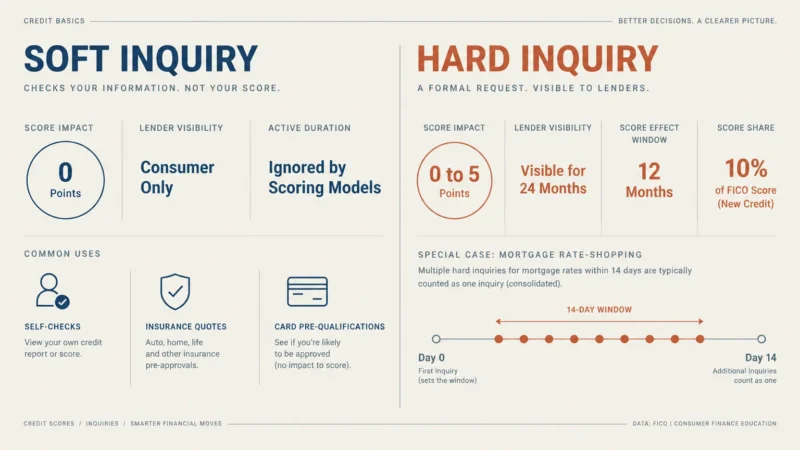
At checkout, most Pay-in-4 applications trigger a soft inquiry that does not affect your score, unlike longer-term financing offers. See how lenders evaluate inquiries in our breakdown of soft pulls vs. hard pulls.
| BNPL Provider | Checkout Credit Inquiry | Reports Pay-in-4 Activity (2026) | Reports Defaults or Collections | Visible on Bank Statements |
|---|---|---|---|---|
| Affirm | Soft pull for Pay-in-4; hard pull possible on some longer loans | Yes, to Experian and TransUnion (originated April 1, 2025 or later) | Yes | Yes |
| Klarna | Soft pull for Pay-in-4; hard pull possible on longer financing | No for standard Pay-in-4 plans | Yes | Yes |
| Afterpay | Soft pull | No | Yes | Yes |
| PayPal Pay in 4 | Soft pull | No | Yes | Yes |
Why Bank Statements Reveal Stacked Loans and Cash Flow Strain
Even when a BNPL plan stays off your credit report, underwriters inspect your checking accounts. Under Fannie Mae Selling Guide B3-4.2-01, bank statements used to verify down payment, closing costs, and reserves must display every deposit and withdrawal transaction.
Repeated biweekly debits to Klarna, Afterpay, Affirm, or PayPal alert underwriters to potential undisclosed liabilities. A January 2025 CFPB study on BNPL usage found that 63% of BNPL borrowers held simultaneous loans and 33% borrowed across multiple providers at once.
Federal Reserve survey data points to a similar liquidity concern. According to the Federal Reserve’s 2025 SHED report (published May 2026), 16% of U.S. adults used BNPL in the prior 12 months, up from 15% the year before.
Follow-up Federal Reserve analysis in August 2026 showed BNPL usage stood at 31% among adults unable to cover a $100 emergency expense using only savings. Seeing stacked biweekly drafts on bank statements prompts underwriters to question whether your cash reserves can absorb home repairs.
Steps to Clear Your BNPL Footprint Before Applying
Clearing your transaction history before a lender pulls your file prevents late underwriting conditions and undisclosed-debt flags. Follow these four steps at least 90 days before submitting a mortgage application.
- Pause new BNPL checkouts 90 days out: Switch everyday purchases to a debit card or a credit card you pay in full monthly so two full bank statement cycles remain free of installment drafts.
- Pay remaining balances to zero early: Settle active Pay-in-4 and monthly plans ahead of schedule and save paid-in-full confirmation emails to prove the debts are closed if older debits appear on statements.
- Check major and specialty consumer reports: Pull weekly credit reports for free at AnnualCreditReport.com, and request your file from LexisNexis Risk Solutions, which owns specialty bureau SageStream, LLC per the CFPB List of Consumer Reporting Companies.
- Disclose open balances and freeze spending before closing: List any remaining BNPL debts on your mortgage application, and avoid financing furniture or appliances before closing day because lenders re-check credit and balances prior to funding.
If an error appears on your credit file, follow the steps in our guide to removing an inaccurate late payment from your credit report. Should a bureau fail to correct a verified BNPL error, file a dispute through the CFPB complaint portal.
If stacked short-term installment debts push your DTI past lender limits, consult an NFCC-member nonprofit credit counselor before locking a mortgage rate.

Common Underwriting Questions on BNPL Accounts
Can you use BNPL funds for closing costs or a down payment?
No. Mortgage underwriting rules require your down payment and closing funds to come from verified, non-borrowed cash reserves, so funds tied to unsecured installment plans or cash advances are ineligible.
Should you close unused BNPL accounts before applying?
Paying balances to zero matters far more than deleting your app profile. Unlike revolving credit cards, closing a zero-balance Pay-in-4 account generally does not improve credit utilization, though saving zero-balance screenshots helps satisfy underwriter documentation requests.
Does one paid-off Pay-in-4 plan hurt mortgage approval?
A single paid-off plan from several months ago rarely blocks approval when your credit scores, cash reserves, and DTI meet loan standards. Underwriters focus on active balances at application, missed payments, and frequent withdrawals across recent bank statements.