
Walking into a bank or clicking the “Open Account” button online marks a major milestone in your financial life. For many, it represents the transition from a cash-based existence to a structured financial future where you can build credit, save for major purchases, and protect your hard-earned money. Without a bank account, you likely rely on expensive check-cashing services or keep large amounts of cash at home—both of which carry significant risks and costs.
According to data from the FDIC, approximately 5.9 million U.S. households remain “unbanked,” meaning no one in the home has a checking or savings account. These households often pay hundreds of dollars annually in unnecessary fees just to access their own money. By following this guide, you will navigate the requirements, avoid common traps, and select an institution that works for your specific needs.

The Essentials: What You Need to Know Before Starting
- Accessibility: A bank account allows you to receive direct deposits from employers, which often reach your balance faster than a paper check.
- Security: Money in an FDIC-insured bank or NCUA-insured credit union is protected up to $250,000 per depositor, per institution.
- Growth: Even basic savings accounts allow your money to grow through interest, whereas cash in a drawer loses value to inflation every day.
- Credit Building: While a bank account itself does not directly impact your credit score, it provides the paper trail and stability lenders look for when you eventually apply for a credit card or auto loan.

Step 1: Determine the Type of Account You Need
Before you look at specific banks, you must decide how you intend to use the account. Most people start with two primary tools: a checking account for daily expenses and a savings account for future goals. You do not have to choose just one; in fact, most experts recommend having both to keep your “spending money” separate from your “growth money.”
The Checking Account
This is your primary financial hub. You use a checking account to pay bills, buy groceries, and withdraw cash from ATMs. These accounts typically come with a debit card and a checkbook. When looking at your first checking account, focus on low fees and a wide ATM network so you don’t pay $3.00 every time you need twenty bucks.
The Savings Account
A savings account is a safe place to store money you don’t plan to spend immediately. These accounts generally pay interest—meaning the bank pays you for keeping your money there. While interest rates on traditional savings accounts can be low, “High-Yield Savings Accounts” (HYSAs) often offered by online banks provide significantly higher returns.
| Feature | Checking Account | Savings Account |
|---|---|---|
| Primary Purpose | Daily transactions and bill pay | Long-term storage and interest |
| Access Method | Debit card, checks, Zelle/Venmo | Internal transfers, limited withdrawals |
| Interest Rates | Usually zero or very low | Variable (Higher in HYSAs) |
| Transaction Limits | Unlimited (usually) | May have monthly withdrawal limits |
“You must gain control over your money or the lack of it will forever control you.” — Dave Ramsey, Personal Finance Author

Step 2: Choose the Right Financial Institution
The banking landscape in the United States offers three main paths: national banks, local credit unions, and online-only banks. Each has distinct advantages and trade-offs. Your choice depends on whether you value physical branches or the highest possible interest rates.
National and Regional Banks
Names like Chase, Bank of America, or Wells Fargo fall into this category. They offer the convenience of thousands of branches and ATMs across the country. If you travel frequently or prefer speaking to someone across a desk, these are strong contenders. However, they often have more stringent fee structures and lower interest rates on savings.
Credit Unions
Credit unions are member-owned, not-for-profit organizations. Because they don’t have to answer to shareholders, they often return profits to members in the form of lower loan rates and fewer fees. You must usually meet “membership requirements”—such as living in a certain city or working in a specific industry—to join. You can find local options through the National Credit Union Administration.
Online-Only Banks
Institutions like Ally, Marcus, or SoFi do not have physical buildings. By saving on real estate costs, they often offer the best “High-Yield” interest rates and rarely charge monthly maintenance fees. These are excellent for tech-savvy individuals who do everything through a mobile app. Ensure any online bank you choose is FDIC-insured before you deposit a single cent.

Step 3: Evaluate Fees and Requirements
One of the biggest mistakes new account holders make is ignoring the fine print. Banks are businesses, and they generate revenue through various fees. When researching how to open a bank account, look specifically for these three cost centers:
Monthly Maintenance Fees
Some banks charge $5 to $15 per month just to keep the account open. However, many will waive this fee if you meet certain criteria, such as maintaining a minimum balance of $1,500 or setting up a monthly direct deposit of $500. If you are a student, many banks offer “Student Checking” which waives these fees entirely until you graduate.
Overdraft and Non-Sufficient Funds (NSF) Fees
If you spend more money than you have in your account, the bank may cover the transaction but charge you an “overdraft fee”—often around $35 per occurrence. Some modern banks have eliminated these fees entirely. You should also ask about “Overdraft Protection,” which links your savings account to your checking account to cover shortfalls automatically.
ATM Fees
If you use an ATM that doesn’t belong to your bank, you might get hit twice: once by the ATM owner and once by your own bank. If you use cash often, ensure your bank has a large local presence or offers “ATM fee reimbursement.”
Step 4: Gather Your Documentation
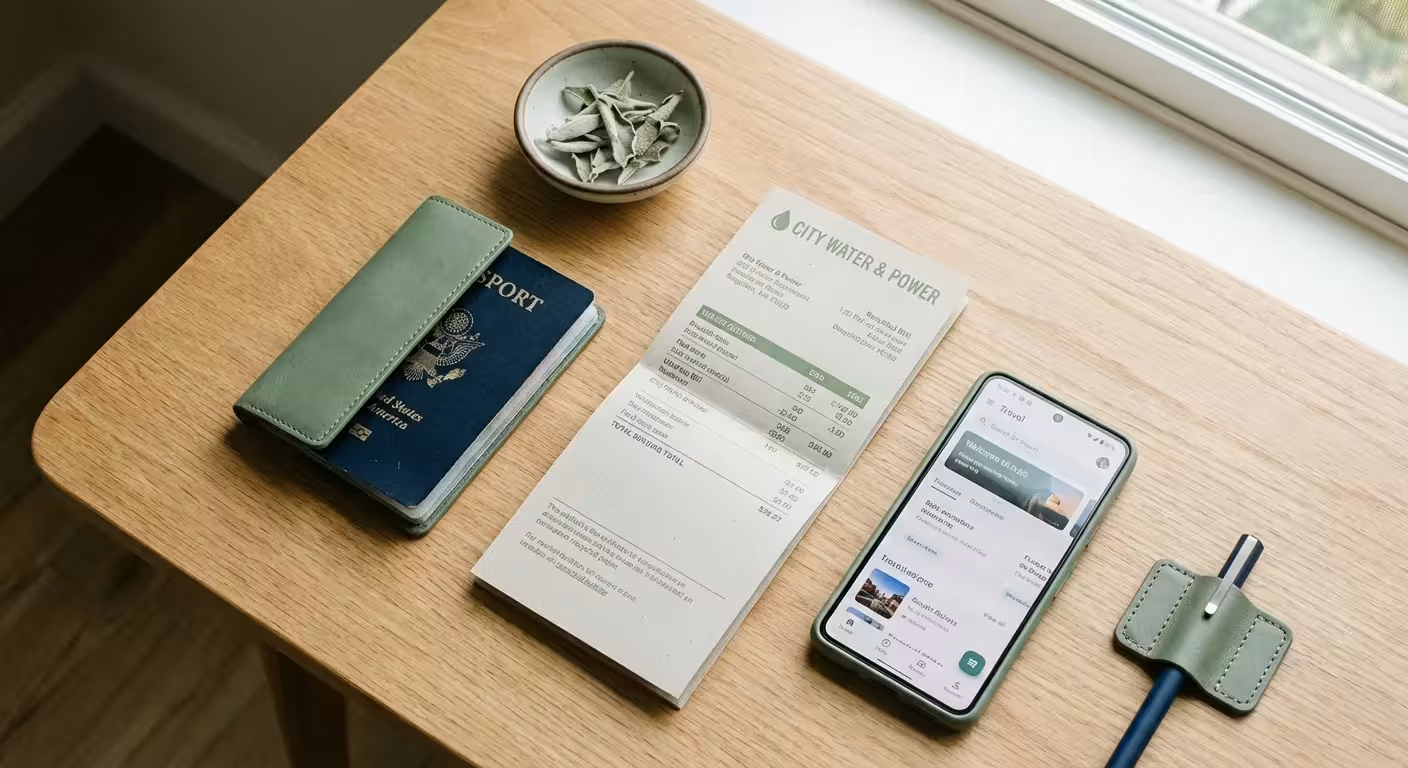
Federal law requires banks to verify your identity to prevent money laundering and fraud. You cannot open an account anonymously. While bank account requirements vary slightly between institutions, you generally need the following items ready:
- Government-Issued Photo ID: A valid driver’s license, state ID, or passport.
- Social Security Number (SSN): Or an Individual Taxpayer Identification Number (ITIN) if you are not a citizen.
- Proof of Address: A utility bill, lease agreement, or credit card statement showing your current home address. Note that a P.O. Box is usually not sufficient for your primary address.
- Birth Certificate: This is often required if you are a minor opening a joint account with a parent.
- Initial Deposit: Most banks require a small amount—ranging from $25 to $100—to “fund” the account and activate it.
If you are applying online, you will likely need to upload photos or scans of these documents. If you are applying in person, bring the physical originals with you.

Step 5: Submit Your Application
Once you have selected your bank and gathered your documents, it is time to apply. This process typically takes 15 to 30 minutes. You can usually choose between an online application or an in-branch visit.
The Online Process
Navigate to the bank’s official website. Look for a button that says “Open an Account” or “Get Started.” You will enter your personal information, scan your ID using your smartphone camera, and answer a few security questions to verify your identity. The bank will then run a check through a system called ChexSystems.
Unlike a traditional credit report, ChexSystems tracks your history with bank accounts. If you have a history of unpaid overdrafts or fraudulent activity at other banks, this might result in a denial. If this happens, look for “Second Chance Checking” accounts specifically designed for those rebuilding their banking history.
The In-Person Process
If you prefer a human touch, visit a branch and ask to speak with a “Personal Banker.” This is often the best route if you have a complicated situation, such as opening an account for a minor or using an ITIN instead of an SSN. The banker will walk you through the paperwork and can often print your temporary debit card on the spot.

Step 6: Make Your Initial Deposit
An account isn’t fully active until you put money into it. You have several options for this first deposit:
- Cash or Check: If you are in a branch, you can simply hand over physical currency or a check.
- Electronic Transfer: If you already have an account elsewhere, you can link the two and move funds digitally.
- Mobile Check Deposit: Most bank apps allow you to take a photo of a check to deposit it.
- Wire Transfer: This is usually for larger amounts and may involve a fee.
Be aware that banks often place a “hold” on your first deposit. This means the money might show in your balance but won’t be available for spending for 1 to 5 business days while the bank verifies the funds. Do not write checks or make purchases against that deposit until the bank confirms the funds are “cleared.”

Step 7: Set Up Your Digital Tools and Security
Your account is open, but your work isn’t quite finished. To get the most value and protection out of your first bank account, you must configure your digital settings. This is where you move from “having an account” to “managing your money.”
Enable Direct Deposit
Ask your employer for a direct deposit form. You will need your new Account Number and the bank’s Routing Number. By setting this up, your paycheck will land in your account automatically on payday—often a day or two earlier than a paper check would.
Download the Mobile App
The app is your command center. It allows you to check your balance in real-time, deposit checks from home, and freeze your debit card if you lose it. Make sure you only download the official app from the Apple App Store or Google Play Store.
Configure Alerts
Set up “Low Balance Alerts.” If your account dips below $50, the bank will send you a text or email. This is your first line of defense against overdraft fees. You should also enable “Transaction Alerts” so you get a notification every time your card is used; this helps you spot fraudulent charges immediately.
Two-Factor Authentication (2FA)
Security is paramount. Enable 2FA so that even if someone steals your password, they cannot log in without a code sent to your physical phone. According to the Federal Trade Commission, identity theft and financial fraud are on the rise; these simple digital hurdles are your best protection.

What Can Go Wrong
While the process is generally smooth, you might encounter a few hurdles. Understanding these ahead of time prevents frustration.
- Application Denied: As mentioned, a poor history in ChexSystems can lead to a denial. You have a right to see your ChexSystems report for free once a year to dispute any errors.
- Hidden Fees: Some “free” accounts are only free if you opt-out of paper statements. Always choose “Electronic Statements” (e-statements) to avoid a $2 to $5 monthly paper fee.
- Joint Account Risks: If you open an account with someone else, they have full legal access to the money. Only open joint accounts with people you trust implicitly, such as a spouse or a parent (if you are a minor).
- Interest Rate Drops: High-yield savings rates are variable. They can go up or down based on the Federal Reserve’s decisions. Don’t be surprised if your 4.5% rate drops to 4.0% over time.

When to Consult a Professional
Most people can open a basic checking or savings account on their own. However, certain situations warrant a conversation with a financial advisor or a specialized banker:
- Opening a Trust Account: If you are managing money for a deceased relative or setting up a legal trust for a child, the paperwork is significantly more complex.
- Business Banking: If you are starting a company, you should not use a personal account. A professional can help you set up a Business Checking account to keep your personal and professional liabilities separate.
- Large International Transfers: If you frequently send or receive large sums of money across borders, you may need a bank with a strong international presence to minimize exchange fees and comply with IRS reporting requirements.
Frequently Asked Questions
Can I open a bank account with no money?
Many banks require an initial deposit, but some online banks and credit unions allow you to open an account with a $0 balance, provided you fund it within 30 to 60 days. Always check the specific bank’s policy before starting the application.
Do I need a job to open a bank account?
No, you do not need an employer to open an account. However, the bank will ask about your “Source of Funds.” This could be an allowance, government benefits, an inheritance, or personal savings. As long as you can provide the required identification and an initial deposit, you can open an account.
Will opening a bank account affect my credit score?
In most cases, no. Opening a bank account typically involves a “soft pull” on your credit report, which does not impact your score. However, if you apply for an overdraft line of credit at the same time, the bank may perform a “hard pull,” which could cause a temporary, minor dip in your score.
How old do I have to be?
To open an account on your own, you generally must be at least 18 years old. If you are under 18, you can usually open a “Custodial” or “Joint” account with a parent or legal guardian who is an adult.
Now that you have the roadmap, your next step is simple: pick three banks that interest you and compare their monthly fees. Once you find the one that fits your lifestyle, gather your ID and Social Security card. Taking this step today puts you in the driver’s seat of your financial life, providing a secure harbor for your money and a springboard for your future goals.
This is educational content based on general financial principles. Individual results vary based on your situation. Always verify current tax laws and regulations with official sources like the IRS or CFPB.
Last updated: February 2026. Financial regulations and rates change frequently—verify current details with official sources.







Leave a Reply