
You find yourself staring at a glowing screen at 11:30 PM. An algorithm just served you an advertisement for a sleek espresso machine, a pair of limited-edition sneakers, or perhaps a high-end software subscription you didn’t know existed five minutes ago. Your heart rate quickens slightly—a phenomenon researchers call the “shopping high.” Within three clicks, you could own it. This moment is the primary battleground of your financial life. Every year, the average American spends approximately $3,768 on impulse purchases, according to recent consumer spending surveys. Over a decade, that is nearly $40,000 drained from potential investments, retirement savings, or emergency funds.
Managing your money effectively rarely requires complex calculus or high-frequency trading. Instead, it relies on mastering the “pause.” The 1% Rule for impulse buys, combined with a mandatory 24-hour delay, provides a structural barrier between your fleeting emotions and your hard-earned cash. By implementing this system, you stop playing defense against clever marketing and start playing offense with your wealth.

Understanding the Mechanics of an Impulse Buy
Impulse buying is not a character flaw; it is a neurological response. When you see something you want, your brain releases dopamine, a neurotransmitter associated with pleasure and reward. Retailers spend billions of dollars every year studying how to trigger this release. They use “dark patterns” in web design—like countdown timers, “only 2 left in stock” warnings, and one-click checkout buttons—to bypass your prefrontal cortex, the part of the brain responsible for logical decision-making.
When you buy on impulse, you are effectively letting your “lizard brain” handle your accounting. The 24-hour rule forces your logical brain to catch up. By the time the sun rises the next day, the dopamine spike has subsided. You can then view the purchase through the lens of utility rather than emotion. Does this item solve a recurring problem? Do you have a place to put it? Can you actually afford it without tapping into next month’s rent? Usually, the answer becomes much clearer after a night of sleep.
“We buy things we don’t need with money we don’t have to impress people we don’t like.” — Robert Quillen (often attributed to Dave Ramsey, Personal Finance Author and Host)

What Exactly Is the 1% Rule?
The 1% Rule is a customizable threshold designed to flag significant purchases before they happen. While a 24-hour delay is useful for a $20 toaster, larger purchases require more rigorous scrutiny. There are two common ways to define the 1% Rule based on your financial comfort level:
- The Annual Income Threshold: If an item costs more than 1% of your annual gross income, you must wait one full week before purchasing. For someone earning $60,000, any item over $600 triggers a mandatory seven-day “cooling off” period.
- The Monthly Budget Threshold: If an item costs more than 1% of your monthly take-home pay, you must wait 24 hours. For someone taking home $4,000 a month, any purchase over $40 requires a sleep cycle.
The beauty of this rule lies in its scalability. It acknowledges that a $100 purchase feels different to a college student than it does to a mid-career professional. By pegging your “pause” to your actual income, you create a personalized financial guardrail that evolves as your career progresses.

The Hidden Cost of “Add to Cart”
When you spend $100 on an impulse buy, you aren’t just losing $100. You are losing the future value of that money. This is the concept of opportunity cost. To understand the gravity of impulse spending, consider the table below. It compares the immediate cost of common impulse categories with their potential value if that money were invested in a low-cost index fund (averaging 7% annual return) over ten years.
| Impulse Category | Average Monthly Cost | 10-Year Total Spent | 10-Year Opportunity Cost (at 7%) |
|---|---|---|---|
| Takeout & Food Delivery | $150 | $18,000 | $26,011 |
| Unused Subscriptions & Digital Media | $50 | $6,000 | $8,670 |
| Clothing & Accessories | $100 | $12,000 | $17,341 |
| Tech Gadgets & Home Decor | $75 | $9,000 | $13,006 |
As the data suggests, seemingly small decisions compound into significant wealth gaps. Using the Consumer Financial Protection Bureau (CFPB) resources for budgeting can help you visualize where your leaks are, but the 1% Rule is the tool that plugs them in real-time.

How to Implement the 24-Hour Delay Today
Action beats intention every time. To make the 1% Rule work, you need to build friction into your shopping environment. If it is too easy to buy, you will buy. Here is how you can set up your environment for success:
- Delete Saved Credit Card Info: Remove your card details from Amazon, Walmart, and your mobile browser. Forcing yourself to physically find your wallet and type in 16 digits provides a “micro-pause” that often kills the impulse.
- Unsubscribe from Retailer Emails: Marketing emails are designed to create artificial urgency. Use a tool to mass-unsubscribe or manually click the link at the bottom of every sales email that hits your inbox. If you don’t see the sale, you don’t feel the “need” to save money by spending it.
- The “Wish List” Method: Instead of adding an item to your cart, add it to a “30-Day List” or a “Wait List” folder in your bookmarks. Revisit this list only once a month. You will find that 80% of the items you once “needed” no longer hold any appeal.
- Calculate the Hourly Wage Cost: Before buying something, divide the price by your hourly take-home pay. If you earn $25 an hour and want a $200 jacket, ask yourself: “Is this jacket worth eight hours of sitting at my desk?” Framing purchases in terms of life energy is a powerful deterrent.

The Psychological Shift: From Consumer to Owner
Most impulse buys are attempts to solve a non-financial problem with a financial solution. Are you buying those shoes because you need footwear, or because you had a stressful day at work and want a quick win? This is where the 24-hour delay excels. It gives you the space to identify the underlying emotion. If you are bored, lonely, or stressed, a new gadget won’t fix that—it will only provide a 15-minute distraction followed by “buyer’s remorse.”
By practicing the 1% Rule, you shift your identity. You stop being a “consumer” who reacts to every advertisement and start being an “owner” who intentionally allocates resources. This builds a sense of financial agency. According to research from the FINRA Investor Education Foundation, individuals with high financial self-efficacy—the belief that they can manage their money effectively—are far more likely to have an emergency fund and less likely to carry high-interest debt.
“Do not save what is left after spending, but spend what is left after saving.” — Warren Buffett, CEO of Berkshire Hathaway

Common Mistakes to Avoid
Even with a rule in place, your brain will try to find loopholes. Be aware of these common traps that can undermine your 24-hour delay:
- The “Sale Price” Trap: You might think, “The sale ends in two hours, so I can’t wait 24!” This is artificial scarcity. Most sales are cyclical. If you miss this one, another will arrive in a few weeks. Never let a ticking clock dictate your budget.
- Stacking Small Purchases: You might avoid a $100 impulse buy but make ten $10 purchases throughout the day. The 1% Rule should apply to your cumulative daily non-essential spending if you find yourself “nickel-and-diming” your budget to death.
- Using “Found Money”: Tax refunds, birthday checks, or work bonuses are often treated as “free money” that doesn’t count toward the rule. In reality, this is the best money to save or invest because it hasn’t been earmarked for bills yet.
- Replacing One Addiction with Another: Some people stop impulse buying physical goods only to start spending excessively on digital upgrades or mobile game micro-transactions. The rule applies to all pixels and plastic alike.

Professional vs. Self-Guided Management
While the 1% Rule is a fantastic self-guided tool, there are times when you might need more structured help. Understanding when to DIY and when to call in an expert can save you more than just the cost of an impulse buy.
Use the 1% Rule on your own if:
- You have a steady income but feel like you “don’t know where the money goes.”
- You occasionally carry a small credit card balance but can pay it off within a month or two.
- You want to increase your savings rate without making drastic lifestyle changes.
Seek professional guidance from a Certified Financial Planner (CFP) or credit counselor if:
- Your impulse spending has led to a debt-to-income ratio that makes it impossible to cover basic necessities.
- You find yourself hiding purchases from your spouse or partner (financial infidelity).
- You are using high-interest payday loans or credit card cash advances to fund lifestyle purchases.
- You feel a compulsive need to shop that interferes with your work or personal relationships.
The Role of Cash in a Digital World
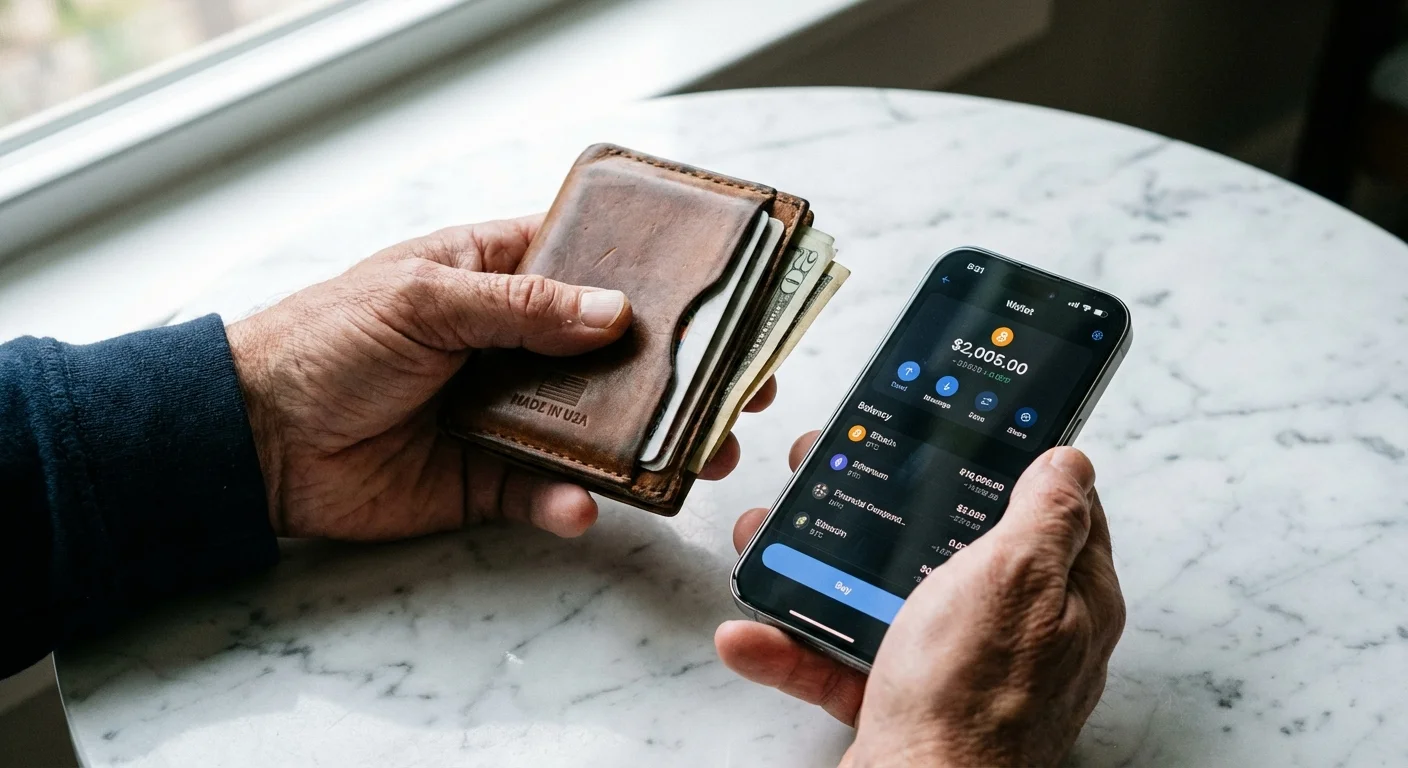
While the 1% Rule works well for online shopping, “offline” impulse buys can be equally damaging. Research consistently shows that people spend more when using credit cards than when using cash. This is because “the pain of paying” is physically lower with a card swipe. You don’t feel the loss of the money until you see the statement weeks later.
If you struggle with impulse buys at physical stores, try the “Cash-Only Weekend” experiment. Withdraw your discretionary spending money for the week in physical bills. When the cash is gone, the shopping stops. This creates a tactile feedback loop that digital banking simply cannot replicate. You can find more information on managing credit and understanding interest at Investopedia.
Frequently Asked Questions
Does the 1% Rule apply to groceries?
Generally, no. The 1% Rule is for discretionary (non-essential) spending. However, if you find yourself constantly buying “luxury” snacks or items not on your list, you might apply a simplified version: If it’s not on the list and costs over $10, it stays on the shelf until the next trip.
What if I really need the item for work?
If an item is a true necessity for your livelihood, it is an investment, not an impulse. However, be honest with yourself. Is that new laptop a “need” because your old one is broken, or a “want” because the new model looks better? If it’s a want, the 24-hour rule still applies.
How do I handle “Buy Now, Pay Later” (BNPL) services?
BNPL services like Affirm or Klarna are designed to make you ignore the 1% Rule by breaking a large purchase into four smaller ones. Always apply the 1% Rule to the total price of the item, not the individual installment. If the total is over your threshold, the delay is mandatory.
What do I do during the 24-hour wait?
Use that time to research alternatives, read negative reviews (not just the 5-star ones), or check if you already own something that serves the same purpose. Often, you’ll find that the “miracle product” has significant flaws that the advertisement conveniently ignored.
Taking Control of Your Financial Future
Building wealth is rarely about a single “big win.” It is the result of hundreds of small, intentional decisions made over several years. The 1% Rule is a simple, repeatable framework that protects your future self from your present impulses. By implementing a 24-hour delay, you reclaim your power as a consumer and ensure that every dollar you spend is working toward a life you actually want to live.
Start today by calculating your personal 1% threshold. Write it down on a sticky note and put it on your monitor or wrap it around your credit card. The next time you feel the rush of a “must-have” item, look at that number, take a breath, and close the tab. Your bank account will thank you tomorrow.
The information in this guide is meant for educational purposes. Your specific circumstances—including income, debt, tax situation, and goals—may require different approaches. When in doubt, consult a licensed professional.
Last updated: February 2026. Financial regulations and rates change frequently—verify current details with official sources.









Leave a Reply