
Think about the total value of everything inside your apartment right now. You might look at your hand-me-down sofa, a few pairs of sneakers, and a five-year-old laptop and conclude that your “stuff” isn’t worth the hassle of an insurance policy. This is perhaps the most dangerous financial assumption a renter can make. Most people underestimate the total value of their belongings by thousands of dollars; more importantly, they completely ignore the massive legal and housing risks that have nothing to do with their furniture.
Renter’s insurance does not just protect your television. It protects your bank account from lawsuits, your lifestyle from temporary homelessness, and your future earnings from the aftermath of a disaster. Whether you are a student in a dorm, a young professional in a studio, or a family in a rented house, understanding the mechanics of these policies is a fundamental pillar of financial literacy.

The Essentials
- Asset Protection: Your belongings cost more to replace new than you think; insurance covers the gap.
- Liability Coverage: This pays for legal defense and settlements if someone is injured in your home or if you accidentally damage someone else’s property.
- Loss of Use: If your apartment becomes uninhabitable due to a covered peril, the policy pays for your hotel and additional food costs.
- Affordability: Most policies cost less than $20 per month—roughly the price of three lattes.

The “I Don’t Own Anything” Fallacy
You might believe your lifestyle is “minimalist,” but if you had to replace everything you own in a single weekend, the price tag would likely shock you. Financial educators often see renters fail to account for the “death by a thousand cuts” nature of their possessions. While you might not own a $5,000 original oil painting, you likely own dozens of items that cost $50 to $200 each.
Consider your wardrobe alone. The average American owns about $1,500 to $2,000 worth of clothing and shoes. Add in your mattress, linens, kitchen appliances, electronics, and toiletries, and you are easily looking at a replacement cost of $10,000 or more. According to data from NerdWallet, the average renter has roughly $20,000 to $30,000 worth of personal property. If a fire or a burst pipe destroys everything, do you have that much cash sitting in a high-yield savings account ready to be spent on forks, towels, and a bed?
Renter’s insurance provides a safety net for these specific “micro-losses” that aggregate into a macro-disaster. It allows you to rebuild your life without depleting your emergency fund or going into high-interest credit card debt.
“Renter’s insurance is one of those things that you don’t think you need until you really, really need it. For the price of a couple of pizzas a month, you’re protecting yourself against a catastrophe that could wipe you out financially.” — Suze Orman, Personal Finance Expert

The Triple Threat: What a Policy Actually Covers
A standard renter’s insurance policy consists of three main components. Understanding these helps you realize why the “I don’t own much” argument falls apart—two of these components have almost nothing to do with your physical belongings.
1. Personal Property Coverage
This covers your “stuff.” It applies whether your belongings are inside your apartment, in your car, or even with you while you travel. If your laptop is stolen from a coffee shop, your renter’s insurance typically covers it, minus your deductible. Covered “perils” (the insurance term for things that happen) usually include fire, smoke, lightning, theft, vandalism, and certain types of water damage—though notably not floods or earthquakes, which require separate riders.
2. Personal Liability and Medical Payments
This is arguably the most important part of the policy. If a guest trips over your rug and breaks their arm, you could be held legally responsible for their medical bills. If you accidentally leave the bathtub running and it floods the apartment below you, the neighbor or the landlord could sue you for damages. Liability coverage pays for your legal defense and any settlements up to your policy limit—which is typically $100,000 or more. Without this, a single accident could lead to a court judgment that garnishes your wages for years.
3. Additional Living Expenses (Loss of Use)
If a fire in the apartment next door causes smoke damage that makes your unit unlivable for three weeks, where will you stay? A hotel in a major city can easily cost $200 per night. Over 21 days, that is $4,200—plus the cost of eating at restaurants because you don’t have a kitchen. “Loss of Use” coverage pays for these extra costs so you aren’t forced to sleep on a friend’s couch or deplete your savings while your home is being repaired.

The Hidden Power of Liability Protection
Many renters view insurance solely as a way to replace a stolen laptop. However, the liability portion of the policy is your ultimate shield against the “worst-case scenario.” We live in a litigious society; the Consumer Financial Protection Bureau (CFPB) frequently highlights the importance of protecting your assets from unexpected legal costs.
Consider these scenarios where liability coverage saves you:
- The Dog Bite: Even if your dog has never been aggressive, a single bite to a stranger in the park could result in a $50,000 medical and legal bill. Most renter’s policies cover this (though some breeds may be excluded).
- The Kitchen Fire: You get distracted while cooking and a small grease fire damages the cabinets and the range hood. Your landlord’s insurance might pay to fix the building, but their insurance company may then “subrogate” against you—meaning they sue you to get their money back. Liability coverage handles this.
- The Holiday Party Slip: A guest spills a drink, someone else slips on it and requires knee surgery. As the host, you are potentially liable for the “unsafe environment.”
When you say “I don’t own much,” you are thinking about your assets. Liability insurance is about protecting your future. It ensures that a mistake today doesn’t haunt your paycheck ten years from now.
Understanding the Cost: ACV vs. Replacement Cost
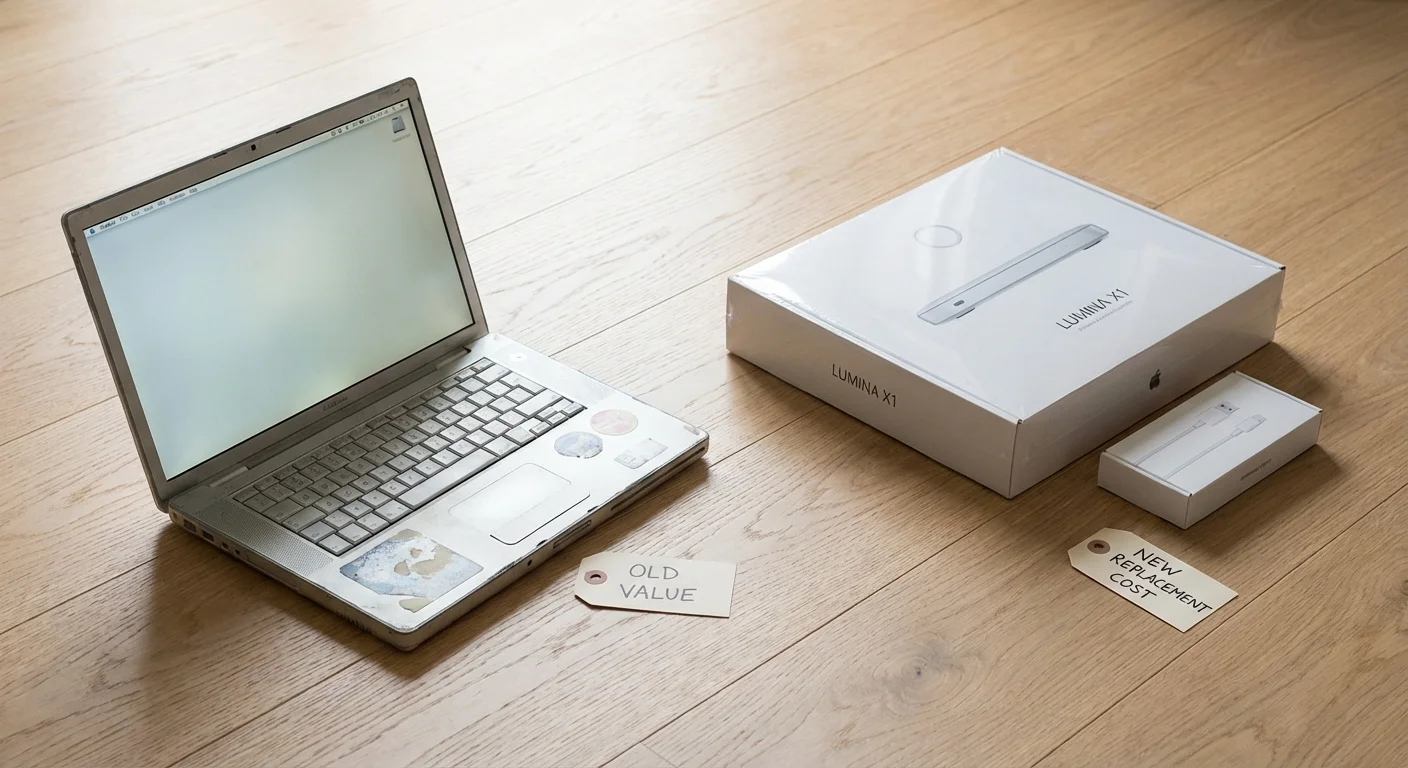
When you buy a policy, you will encounter a choice that significantly impacts your payout after a claim: Actual Cash Value (ACV) or Replacement Cost. This is where many renters make a mistake that leaves them frustrated during the claims process.
| Feature | Actual Cash Value (ACV) | Replacement Cost |
|---|---|---|
| Definition | Pays what the item is worth today (depreciated value). | Pays what it costs to buy the same item new today. |
| Example: 5-Year-Old TV | You get $150 (the thrift store price). | You get $600 (the price of a new equivalent). |
| Monthly Premium | Slightly lower. | Slightly higher (usually about 10-15% more). |
| Best For | Extreme budget-conscious renters. | Anyone who couldn’t afford to replace everything out of pocket. |
Most financial experts recommend choosing Replacement Cost coverage. While the premium is a few dollars more per year, it ensures that if your $1,000 sofa is destroyed, you actually get $1,000 to buy a new one, rather than the $200 it would have fetched on Facebook Marketplace.

The Cost of Renter’s Insurance
One of the most common reasons people skip renter’s insurance is the perceived cost. However, it remains one of the most affordable forms of protection in the United States. According to Bankrate, the average cost of renter’s insurance is approximately $174 per year, or about $14.50 per month.
Your specific rate depends on several factors:
- Geography: Rates are higher in areas prone to natural disasters or with higher crime rates.
- Deductible: Choosing a $1,000 deductible instead of a $500 deductible will lower your monthly payment.
- Credit Score: In most states, insurers use a credit-based insurance score to determine risk.
- Claims History: If you have filed multiple claims in the past, your rates may be higher.
- Safety Features: Having smoke detectors, deadbolts, and fire extinguishers can often trigger discounts.
To put this in perspective, $15 a month is equivalent to roughly 50 cents a day. For the cost of two quarters, you buy peace of mind against a $100,000 lawsuit. It is the definition of a high-value financial move.

The Landlord’s Insurance Myth
A dangerous misconception persists among renters: “My landlord has insurance, so I’m covered.” This is fundamentally false. A landlord’s insurance policy covers the physical structure of the building—the walls, the roof, the plumbing, and the common areas. It does not cover your personal belongings, nor does it cover your personal liability.
If the roof leaks and ruins your bed, the landlord’s insurance pays to fix the roof. It will not pay you a dime for the bed. Furthermore, if you are found responsible for the leak (for example, if you caused a clog that led to an overflow), the landlord’s insurance company may actually pursue you for the cost of the building repairs. Without your own policy, you are left entirely exposed.

Avoiding Common Errors
Even when renters decide to get coverage, they often fall into traps that limit the effectiveness of their policy. To get the most out of your insurance, avoid these common mistakes:
1. Failing to document your belongings. If your apartment burns down, will you remember every book, kitchen gadget, and pair of socks you owned? Probably not. Take twenty minutes today to walk through your home and record a video on your smartphone. Open every drawer and closet. Upload that video to the cloud. Having this digital inventory makes the claims process significantly faster and ensures you get every dollar you are owed.
2. Underestimating the need for “floaters” or “scheduled property.” Standard policies have “sub-limits” for high-value items. For example, a policy might cover $20,000 in total property but only $1,500 for jewelry. If you have an engagement ring worth $5,000, it isn’t fully covered. You need to add a specific rider—often called scheduled personal property—to cover that specific item for its full value.
3. Not bundling policies. If you already have car insurance, call your current provider. Most companies offer a “multi-policy discount” that can reduce your car insurance premium by enough to effectively make the renter’s insurance policy free.
4. Forgetting to update the policy. As your life changes—you get married, you buy a high-end gaming PC, or you move to a new zip code—you must update your coverage. An outdated policy is only slightly better than no policy at all.

When DIY Isn’t Enough
While most people can buy a renter’s insurance policy online in ten minutes, there are specific scenarios where you should consult a professional or dig deeper into the fine print:
- Home-Based Businesses: If you run a business out of your apartment, your standard renter’s policy likely won’t cover your professional equipment or business liability. You may need a “home business endorsement.”
- High-Value Collections: If you own significant amounts of art, rare coins, or expensive musical instruments, a standard policy is insufficient. You need a specialized appraisal and specific riders.
- Roommate Situations: Generally, you shouldn’t share a policy with a roommate unless you are related or in a long-term domestic partnership. If you share a policy and the roommate makes a claim, it goes on your insurance record too. It is much cleaner for each person to have their own individual policy.

How to Shop for a Policy
Ready to get covered? Follow these actionable steps to find the best deal:
- Estimate your coverage needs. Don’t guess. Use a basic calculator to total your clothes, electronics, and furniture. Most people should start with at least $20,000 in property and $100,000 in liability.
- Check your car insurance provider first. Bundling is usually the cheapest route.
- Compare at least three quotes. Use sites like Consumer Reports to find highly-rated insurers for customer service. Price is important, but a company that fights you on every claim is a poor investment.
- Adjust your deductible. If you have $1,000 in an emergency fund, consider a $1,000 deductible to save on your monthly premium.
- Read the exclusions. Make sure you know what is not covered. Most policies exclude “acts of God” like earthquakes and floods. If you live in a flood zone, you may need a separate policy through the National Flood Insurance Program.
Frequently Asked Questions
Does renter’s insurance cover my roommate’s stuff?
Usually, no. Unless your roommate is specifically listed on the policy (which most insurers discourage), their belongings are not covered by your policy. They need their own coverage.
What if my bike is stolen from outside the library?
Yes, this is one of the great perks of renter’s insurance. It covers your personal property “off-premises.” This means your belongings are protected even when they are not physically inside your apartment.
Does it cover bed bugs?
Generally, no. Most insurance companies view bed bugs and other infestations as a maintenance issue rather than a sudden “peril.” Dealing with pests is usually the responsibility of the tenant and the landlord.
Is renter’s insurance required by law?
No state law requires renter’s insurance, but many landlords require it as a condition of your lease. They do this to minimize their own liability and ensure that if you cause damage to the building, there is an insurance company to pay for it.
Can I get coverage if I have a bad credit score?
Yes, though your premiums may be higher. Some companies specialized in “low-credit” insurance, but even with a poor score, the cost is usually quite manageable compared to other types of insurance.
Taking the Next Step
Securing your financial future isn’t always about big stock market wins or massive raises; often, it’s about plugging the holes where money can leak out during a crisis. Renter’s insurance is the ultimate “plug” for your financial bucket. It handles the “what-ifs” so you can focus on your long-term goals.
Take twenty minutes this week to get a quote. Look at your belongings not as a collection of “old stuff,” but as the foundation of your daily life. Protecting that foundation is one of the smartest, most cost-effective decisions you will ever make. Whether you have a mansion’s worth of furniture or just a laptop and a bed, the liability and loss-of-use protections alone make the policy a non-negotiable part of a healthy financial plan.
This article provides general financial education and information only. Everyone’s financial situation is unique—what works for others may not work for you. For personalized advice, consider consulting a qualified financial professional such as a CFP or CPA.
Last updated: February 2026. Financial regulations and rates change frequently—verify current details with official sources.









Leave a Reply