
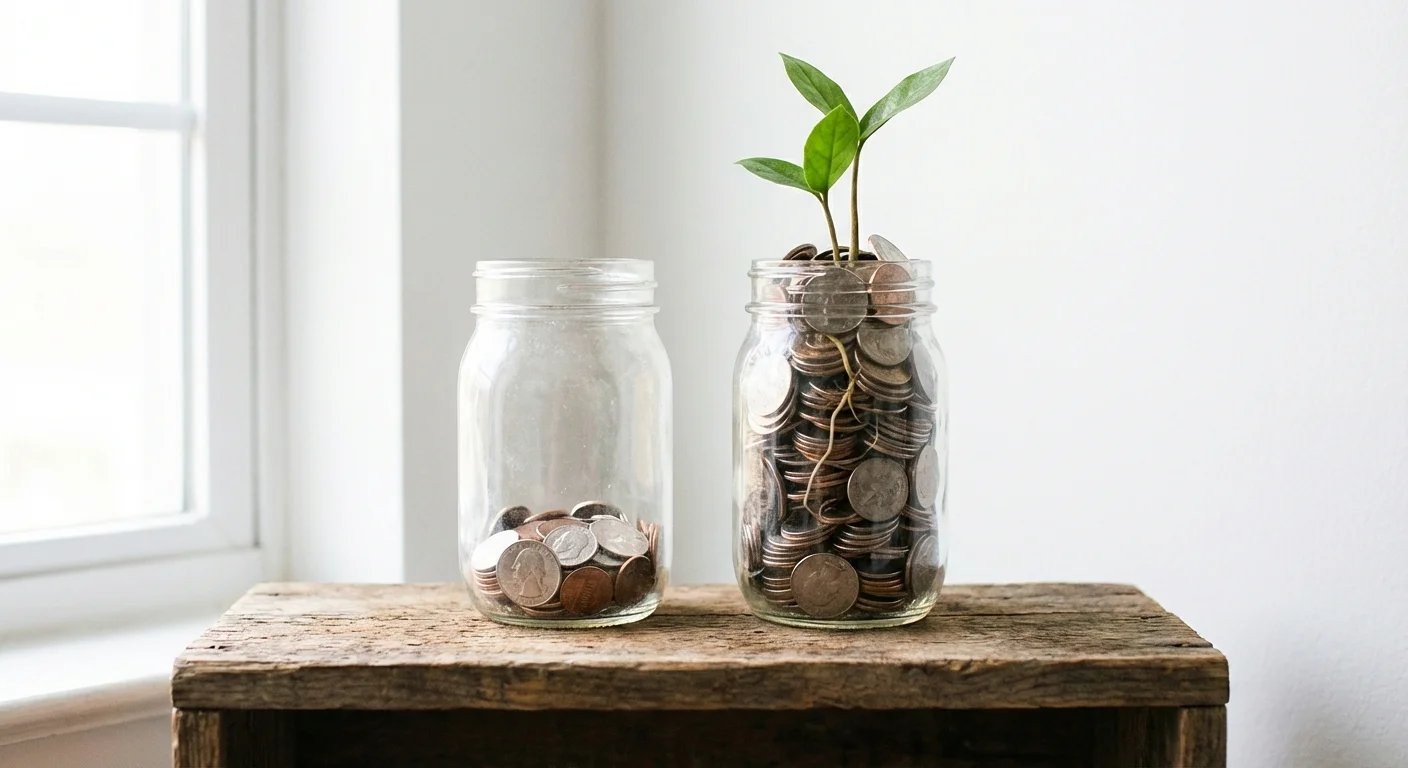
If you keep $10,000 in a standard savings account at one of the nation’s largest brick-and-mortar banks, you likely earn an interest rate of approximately 0.01%. After one full year, your balance grows by exactly one dollar. In contrast, placing that same $10,000 into a high-yield savings account (HYSA) earning 4.50% APY generates $450 in interest over the same period. This massive gap represents the “lazy money tax”—the price you pay for leaving your cash in an account that fails to keep pace with inflation or market standards.
Choosing where to save money involves more than just hunting for the highest number. You must balance accessibility, security, and technological convenience. This guide breaks down the structural differences between high yield vs traditional savings, helping you determine which vehicle serves your specific financial goals for 2025 and beyond.

The Essentials: Comparing Savings Vehicles
- Interest Rates: High-yield accounts typically offer rates 10 to 50 times higher than traditional savings accounts.
- Accessibility: Traditional accounts offer easier access to physical branches and ATMs, while HYSAs usually prioritize digital transfers.
- Security: Both account types carry the same federal protections through the FDIC or NCUA, up to $250,000 per depositor, per institution.
- Fees: HYSAs often eliminate monthly maintenance fees to remain competitive, whereas traditional banks may charge $5 to $15 unless you maintain a high minimum balance.

Understanding the Mechanics of a Traditional Savings Account
Traditional savings accounts are the “old guard” of the banking world. You likely opened one of these at the same time you opened your first checking account. These accounts reside within large, national retail banks or local community banks that maintain physical branches. Because these institutions fund expensive real estate, teller salaries, and physical infrastructure, they rarely offer competitive interest rates to their depositors.
The primary advantage of a traditional account is its integration. If you have your mortgage, checking account, and savings all under one roof, moving money is instantaneous. You can walk into a branch, speak to a human, and withdraw cash immediately. For many, this physical presence provides a sense of security that digital-only banks cannot replicate. However, you pay for this convenience through lost interest. According to the Federal Deposit Insurance Corporation (FDIC), the national average interest rate for savings accounts often hovers well below 1%, even when the Federal Reserve raises benchmark rates.
What Makes a High-Yield Savings Account Different?
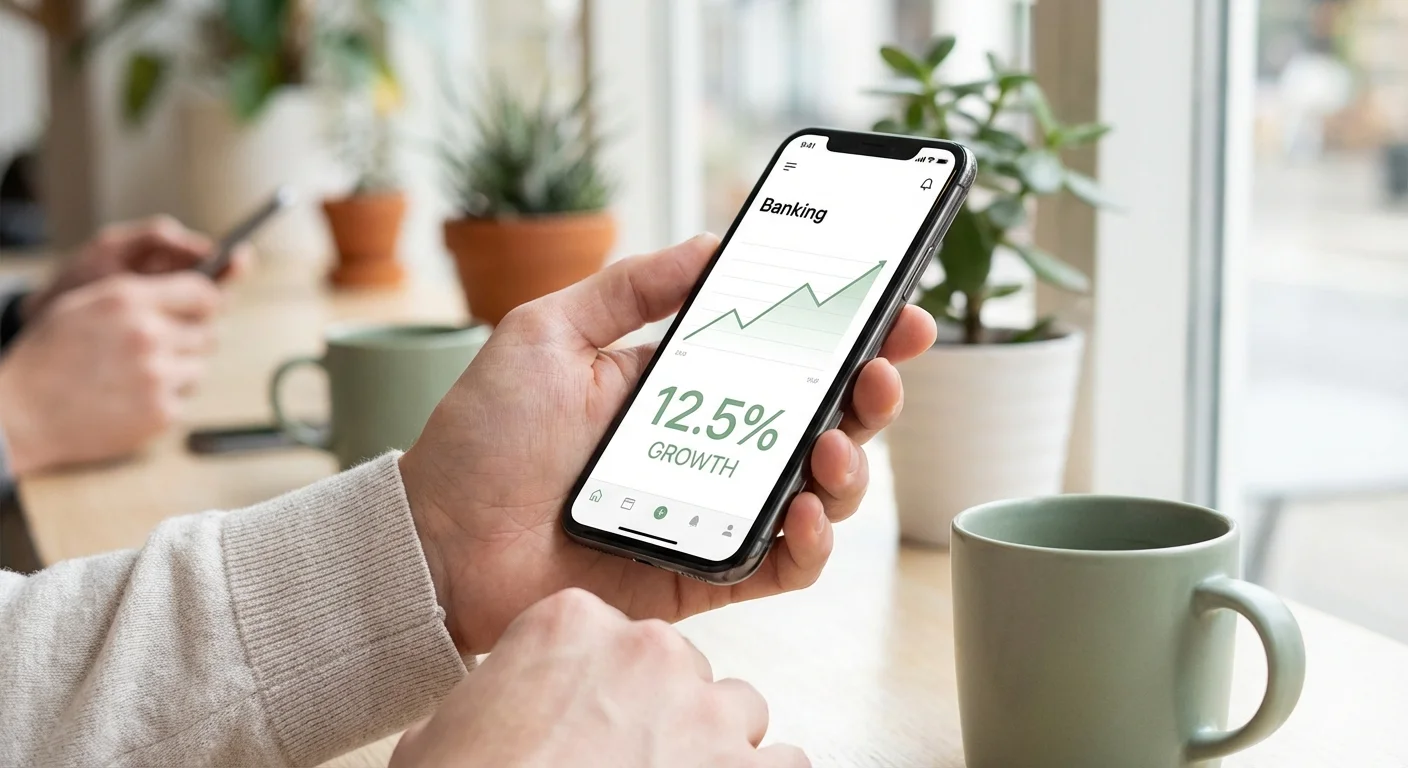
A High-Yield Savings Account is not a complex investment product; it is simply a savings account that pays a significantly higher Annual Percentage Yield (APY). Most HYSAs are offered by online-only banks or the digital arms of large financial institutions. By eliminating the overhead costs of physical branches, these banks pass the savings on to you in the form of higher interest rates.
The best HYSA 2025 options focus on compounding your wealth daily or monthly. While the rate is variable—meaning it can shift based on the Federal Reserve’s decisions—it consistently outperforms the “big bank” alternatives. These accounts are ideal for money you don’t need for daily expenses but want to keep liquid, such as an emergency fund or a down payment for a home.
“The philosophy of the rich and the moved is this: I’d rather have a 1% chance of making $10 million than a 100% chance of making $10.” — Ramit Sethi, Author of I Will Teach You To Be Rich
High Yield vs. Traditional Savings: Side-by-Side Comparison
| Feature | Traditional Savings Account | High-Yield Savings Account (HYSA) |
|---|---|---|
| Average APY | 0.01% – 0.10% | 4.00% – 5.50% (Market Dependent) |
| Monthly Fees | Common ($5-$15), often waived with balance | Rarely charged |
| Physical Branches | Extensive local/national networks | None or very few |
| Transfer Speed | Instant (if linked to checking) | 1–3 business days (to external banks) |
| ATM Access | Widely available | Limited (though some provide ATM cards) |
| FDIC Insured | Yes | Yes |

Why Interest Rates Matter More Than You Think
Many people ignore interest rates because they assume the difference between 0.1% and 4.5% is negligible for small balances. This line of thinking ignores the power of compound interest and the impact of inflation. Inflation acts as a “hidden tax” on your purchasing power. If inflation runs at 3% and your savings account earns 0.01%, you are effectively losing 2.99% of your money’s value every year.
Using a high-yield account allows you to tread water or even outpace inflation. Over a decade, the difference in interest earned on a $25,000 emergency fund can amount to over $10,000. This is “free money” provided by the bank simply for choosing a more efficient storage container for your cash. You can use tools provided by the Consumer Financial Protection Bureau (CFPB) to understand how different interest rates and compounding frequencies affect your long-term savings goals.

How to Identify the Best HYSA 2025
Not all high-yield accounts are created equal. When searching for where to save money, look beyond the headline rate. Banks often use “teaser rates” to attract new customers, only to drop those rates significantly after a few months. To find a sustainable, high-quality account, evaluate the following criteria:
- Rate History: Check if the bank consistently stays at the top of the charts or if they only recently spiked their rate to attract deposits.
- Minimum Balance Requirements: Some banks require a $5,000 or $10,000 deposit to unlock the highest tier of interest. Look for accounts with $0 minimums if you are just starting.
- Ease of Use: Since you will manage this account primarily through a mobile app or website, the interface must be intuitive. Read user reviews specifically regarding the bank’s mobile check deposit feature.
- Customer Support: Since you cannot walk into a branch, look for 24/7 phone support or robust live chat options.
- Transfer Limits: While federal Regulation D—which previously limited savings withdrawals to six per month—has been relaxed, some banks still enforce their own limits or charge fees for excessive transfers.

What Can Go Wrong: Risks and Considerations
While HYSAs are incredibly safe, they are not without friction. Understanding these potential hurdles prevents frustration later on. Moving your money into an online-only environment requires a slight shift in how you manage your liquidity.
Transfer Delays: When you need money from your HYSA, it usually takes one to three business days to arrive in your traditional checking account. If you have a sudden car repair on a Friday evening, you might not see the funds until Tuesday. To mitigate this, keep a small “buffer” in your traditional savings and use the HYSA for your larger, less-immediate needs.
Rate Volatility: High-yield rates are not locked in like a Certificate of Deposit (CD). If the Federal Reserve lowers interest rates, your HYSA rate will drop shortly after. You must remain vigilant; if your “high-yield” bank stops being competitive, you may need to move your money again to maintain your earnings.
Technical Hurdles: If a digital bank experiences a server outage, you lose access to your funds temporarily. While these events are rare, they highlight the importance of not keeping 100% of your liquid cash in a single digital institution.

The Psychological Benefit of Separating Your Money
Beyond the math, using a separate HYSA offers a psychological advantage known as “mental partitioning.” When your savings sit in the same bank as your checking account, the total balance can feel like a single pool of spending money. It is tempting to dip into your “savings” to cover a splurge because the transfer happens with one click.
By moving your emergency fund or “vacation fund” to a different institution, you create a “speed bump” for your spending. This separation forces you to be intentional. You see your HYSA balance growing independently, which provides a sense of progress that motivates further saving. Many modern HYSAs also offer “buckets” or “vaults,” allowing you to visualize exactly how much you have saved for specific goals without opening multiple accounts.

When to Consult a Professional
While choosing a savings account is a foundational task, certain situations warrant a conversation with a Certified Financial Planner (CFP) or a tax advisor:
- Large Windfalls: If you receive an inheritance or legal settlement exceeding $250,000, you need a strategy to ensure all your funds are FDIC-insured across multiple institutions.
- Tax Planning: High-yield interest is taxed as ordinary income. If you are in a high tax bracket, a professional might suggest tax-advantaged alternatives like municipal bonds or Treasury bills.
- Balancing Debt and Savings: If you have high-interest credit card debt, a professional can help you decide whether to build a large savings cushion or aggressively pay down debt first.
Frequently Asked Questions
Is my money as safe in an online HYSA as it is in a big national bank?
Yes, provided the bank is FDIC-insured. The Federal Deposit Insurance Corporation provides the exact same protection for online banks as it does for physical banks. You can verify a bank’s insurance status using the FDIC’s BankFind tool.
Do I have to pay taxes on the interest I earn?
Yes. Any interest earned over $10 in a calendar year must be reported to the IRS. Your bank will send you a Form 1099-INT in January. This interest is taxed at your standard income tax rate.
Can I use a high-yield savings account for my business?
Some banks offer business-specific high-yield accounts, but many consumer HYSAs are strictly for personal use. Check the terms of service, as using a personal account for business transactions can lead to account closure.
How many savings accounts should I have?
There is no hard limit. Many people find success using a “hub and spoke” model: one traditional checking/savings account for daily life and 2-3 HYSAs (or one HYSA with buckets) for specific goals like emergencies, taxes, or travel.
Next Steps: Moving Your Cash
The process of opening a high-yield savings account takes less than ten minutes. Most banks allow you to link your current checking account electronically by verifying two small “micro-deposits.” Once linked, you can initiate your first transfer.
Do not feel the need to move your entire life’s savings at once if you are nervous. Start by moving $500 or $1,000 to get a feel for the interface and the transfer speeds. Once you see the first month’s interest payment hit your account, the math usually speaks for itself. Your money works hard for you when you provide it with the right environment; stop letting it sit idle in a low-interest traditional account.
This is educational content based on general financial principles. Individual results vary based on your situation. Always verify current tax laws and regulations with official sources like the IRS or CFPB.
Last updated: February 2026. Financial regulations and rates change frequently—verify current details with official sources.







Leave a Reply