
Your emergency fund serves as your financial shock absorber. It sits quietly in the background, ready to deploy the moment your car transmission fails or your roof starts leaking. However, leaving five figures of cash in a traditional bank account feels like a missed opportunity. While the average national savings rate often hovers near a negligible 0.45%, high-yield options offer significantly more growth—sometimes ten times the national average.
The dilemma arises when you decide where to park that safety net. Should you prioritize the maximum interest rate found in a high-yield savings account, or do you value the immediate liquidity and debit card access of a high-yield checking account? Choosing the wrong vehicle might leave you jumping through bureaucratic hoops during a crisis or, conversely, losing hundreds of dollars in potential interest every year. You need a strategy that balances accessibility with a competitive annual percentage yield (APY).

Understanding High-Yield Savings Accounts (HYSA)
A high-yield savings account is the most traditional home for an emergency fund. These accounts, typically offered by online banks like Ally, Marcus by Goldman Sachs, or SoFi, provide much higher interest rates than the “Big Four” brick-and-mortar institutions. Because online banks lack the massive overhead of physical branches, they pass those savings on to you in the form of a higher APY.
HYSAs offer a specific kind of safety. Your deposits are generally insured by the Federal Deposit Insurance Corporation (FDIC) or the National Credit Union Administration (NCUA) up to $250,000 per depositor, per insured bank. This means even if the bank fails, your emergency fund remains safe. You can verify a bank’s insurance status through the FDIC BankFind tool.
The primary benefit of a savings account for an emergency fund is the “separation of church and state.” When your emergency money sits in a separate savings bucket—especially at a different bank than your daily checking—you are less likely to spend it on non-emergencies. However, this separation creates friction. If you need the money instantly, a transfer to your external checking account might take one to three business days.
“Do not save what is left after spending, but spend what is left after saving.” — Warren Buffett
The Reality of High-Yield Checking Accounts (HYCA)
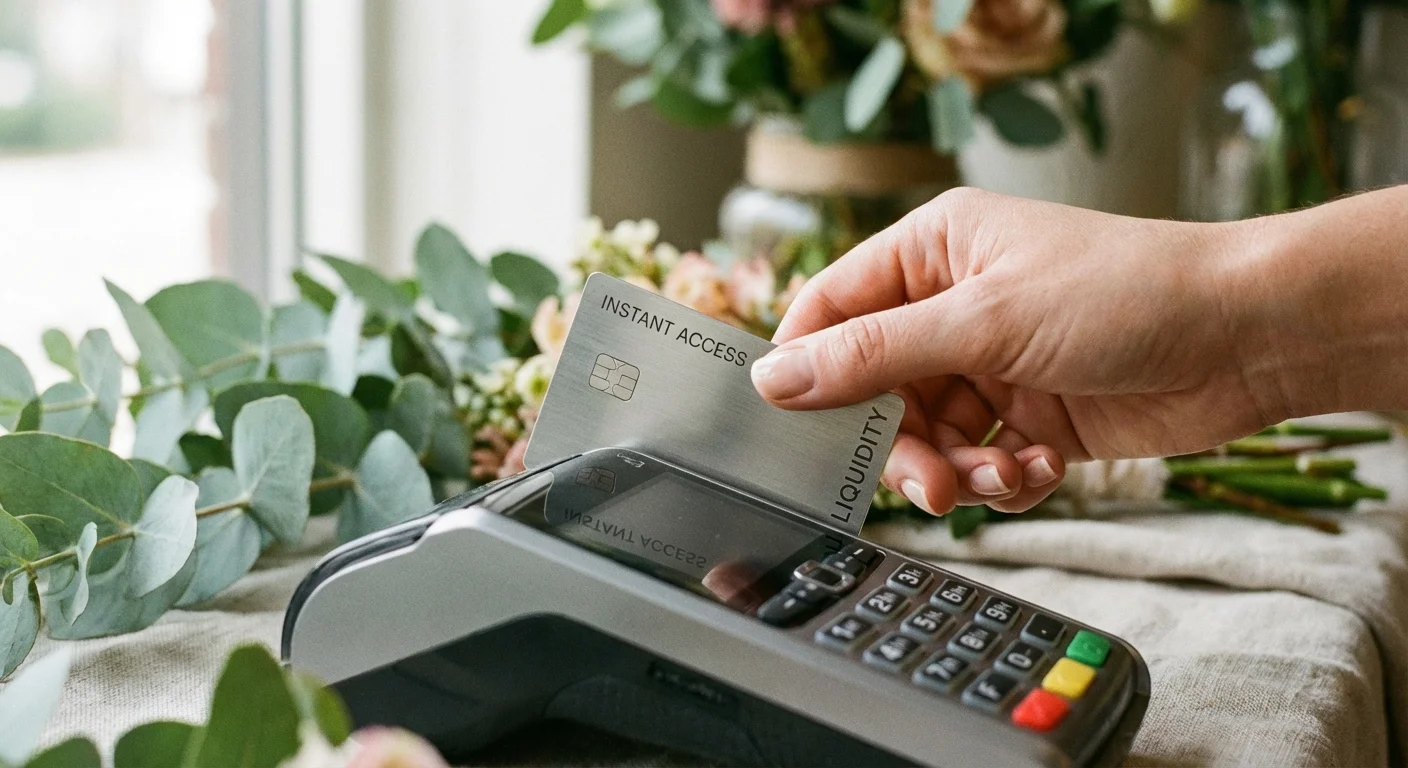
High-yield checking accounts, often called “Rewards Checking,” promise the best of both worlds: the liquidity of a checking account and the interest rates of a savings account. On paper, they look superior. You can access your funds via a debit card or checkbook immediately, and some credit unions offer APYs that actually exceed those of top-tier savings accounts.
There is, however, a catch—usually several. To earn the “high-yield” rate, you must typically meet monthly requirements. If you miss even one requirement, your interest rate might drop to near zero for that month. Common requirements include:
- Making 10 to 15 debit card transactions per month.
- Setting up a recurring direct deposit (often $500 or more).
- Enrolling in electronic statements rather than paper ones.
- Logging into your online portal at least once a month.
Furthermore, high-yield checking accounts often have “balance caps.” A bank might offer a stellar 5.00% APY, but only on the first $5,000 or $10,000. Any dollar above that amount earns a much lower rate. If your emergency fund is $20,000, you might earn less total interest in a capped checking account than in an uncapped savings account with a slightly lower rate.

Head-to-Head Comparison: Liquidity vs. Yield
When evaluating these two options for your emergency fund, consider how the features align with your specific spending habits and the size of your fund. The following table highlights the core differences you will encounter in the current market.
| Feature | High-Yield Savings (HYSA) | High-Yield Checking (HYCA) |
|---|---|---|
| Typical APY | 4.00% – 5.00%+ | 3.00% – 6.00% (with requirements) |
| Access to Funds | Transfers (1-3 days), some ATM cards | Immediate (Debit card, checks, Zelle) |
| Maintenance Requirements | Minimal to none | Frequent (10-15 debit swipes/month) |
| Balance Caps | Rare (usually applies to huge sums) | Common (often capped at $5k–$15k) |
| Risk of Overspending | Low (money is “hidden”) | High (accessible via daily debit card) |

The Impact of Interest Rates on Your Safety Net
To understand why this choice matters, you must look at the math over time. Let’s assume you have a $15,000 emergency fund. You are comparing a top-tier HYSA at 4.50% APY with no requirements against a HYCA that offers 5.00% APY on the first $10,000 and 0.10% on anything above that.
In the HYSA, you earn approximately $675 in interest over one year. In the HYCA, you earn $500 on the first $10k and just $5 on the remaining $5k, totaling $505. Despite the HYCA having a higher “headline” rate, the HYSA earns you $170 more because of the balance cap. This illustrates why you must read the fine print regarding “tiered” interest rates.
Interest rates are also not static. The Federal Reserve influences these rates through the federal funds rate. When the Fed raises rates to combat inflation, HYSA and HYCA rates typically climb. When the Fed cuts rates, your bank will likely lower your APY within weeks. You can track these broader economic trends through the Federal Reserve’s official schedule.

The Psychology of the “Barrier”
Personal finance is as much about behavior as it is about math. For many people, the biggest threat to an emergency fund isn’t a low interest rate—it’s the temptation to use the money for a “semi-emergency” like a vacation or a new gadget.
A high-yield savings account provides a psychological barrier. Because you cannot simply swipe a card at a register to spend that money, you are forced to pause. You must log in, initiate a transfer, and wait. This “waiting period” acts as a filter, ensuring that you only tap into those funds when a genuine crisis occurs. Elizabeth Warren, in her work on the 50/30/20 rule, emphasizes the importance of the “20%” for savings and debt repayment. An emergency fund is the foundation of that 20%, and protecting it from your own impulses is a valid strategy.

The Hybrid Strategy: Tiering Your Emergency Fund
You don’t necessarily have to choose just one. Many financial educators recommend a “tiered” approach to liquidity. This strategy ensures you have immediate cash for minor hiccups while maximizing earnings on the bulk of your safety net.
- Tier 1: Immediate Cash ($1,000 – $2,000). Keep this in a high-yield checking account or a local savings account linked to your debit card. This covers a blown tire or a surprise vet visit.
- Tier 2: The Core Fund (3-6 months of expenses). Keep the remainder in a high-yield savings account. This earns a competitive rate and remains safe from daily spending temptations.
- Tier 3: The Extended Buffer (Optional). If you have more than 6 months of expenses, some people move this into a Certificate of Deposit (CD) or a Money Market Account (MMA) for even higher stability or slightly better rates, though this reduces liquidity.
By splitting the money, you solve the “liquidity vs. yield” problem. You have enough instant cash to avoid credit card debt during a minor emergency, but the majority of your wealth is still compounding at the highest possible rate.

Professional vs. Self-Guided Management
Deciding where to put your money is often a self-guided journey, but there are times when seeking professional advice or automated tools makes more sense. Consider these scenarios:
- The Busy Professional (Self-Guided with Automation): If you have a stable income and just need to set it and forget it, use an online HYSA. Set up an “automatic transfer” from your paycheck. Ramit Sethi often advocates for automating your finances so you don’t have to rely on willpower.
- The High-Net-Worth Individual (Professional): If your “emergency fund” exceeds $250,000, you need to worry about FDIC insurance limits. A financial advisor or a Certified Financial Planner (CFP) can help you “ladder” your accounts across multiple institutions or use services like MaxMyInterest to ensure every dollar is insured and optimized.
- The Rebuilder (Self-Guided with Local Support): If you are rebuilding your credit or have been denied accounts in the past (often due to ChexSystems reports), you might benefit from a “second chance” checking account at a local credit union. These may not have the highest yields, but they provide a path back to financial stability.

Common Mistakes to Avoid
Even with the best intentions, it is easy to make errors that cost you money or access. Watch out for these pitfalls:
Chasing “Teaser” Rates: Some banks offer an incredibly high APY that expires after three or six months. Unless you are willing to move your money frequently, look for an institution with a history of consistently high rates rather than a one-time gimmick.
Ignoring “The Swipe” Requirement: In a high-yield checking account, if you only make 9 swipes instead of the required 10, you might lose your high interest for the entire month. If you aren’t a natural “debit card spender,” do not choose a high-yield checking account. You will likely fail the requirements and earn nothing.
Forgetting About Inflation: While 4.5% or 5% sounds great, if inflation is running at 4%, your “real” return is only 0.5% or 1%. An emergency fund is not meant to make you wealthy; it is meant to preserve your purchasing power. Don’t get so caught up in chasing an extra 0.10% that you move your money to an unproven or non-FDIC-insured platform.
Neglecting Beneficiaries: Regardless of which account you choose, ensure you set up a “Payable on Death” (POD) beneficiary. If something happens to you, your family will need immediate access to that emergency fund without going through a months-long probate process.
Frequently Asked Questions
Is high-yield checking as safe as high-yield savings?
Yes, as long as the institution is FDIC-insured (for banks) or NCUA-insured (for credit unions). The safety comes from the federal backing, not the type of account. Always check the bank’s credentials on the NCUA locator or the FDIC website.
Can I have both a high-yield checking and a savings account at the same bank?
Often, yes. Many online banks like SoFi or Ally encourage this by offering better rates when you have both or when you set up direct deposit. This makes transferring money between the two accounts instantaneous.
Do I have to pay taxes on the interest I earn?
Yes. Interest earned in both HYSAs and HYCAs is considered taxable income. If you earn more than $10 in interest, your bank will send you a 1099-INT form at the end of the year. You can learn more about reporting this on the IRS website.
What is the “Regulation D” rule for savings accounts?
Historically, federal law (Regulation D) limited savings account withdrawals to six per month. While the Federal Reserve suspended these limits in 2020, some banks still enforce their own limits or charge fees for excessive withdrawals. Checking accounts do not have these restrictions, making them better for frequent access.
Ultimately, the “better” account is the one you will actually use and maintain. If you enjoy tracking your spending and easily hit debit card minimums, a high-yield checking account offers unmatched flexibility and top-tier rates. If you prefer a “hands-off” approach where your money is protected from your own spending habits, a high-yield savings account is the superior choice for your peace of mind.
Start by evaluating your current emergency fund balance. If it’s over $10,000, look closely at the balance caps on checking accounts. If it’s under $5,000, the convenience of a high-yield checking account might outweigh the slightly higher stability of a savings account. Whatever you choose, moving your money out of a standard 0.01% account is the single most important step you can take today.
The information in this guide is meant for educational purposes. Your specific circumstances—including income, debt, tax situation, and goals—may require different approaches. When in doubt, consult a licensed professional.
Last updated: February 2026. Financial regulations and rates change frequently—verify current details with official sources.



Leave a Reply